End of Lease Inspection: Key Takeaways
- End of lease inspections are standard and predictable. Inspectors focus on vehicle condition, mileage, and wear beyond normal use, not minor imperfections
- Not all damage leads to charges. Normal wear like light scratches or minor interior use is usually accepted, while larger issues like dents, worn tires, or cracked glass may result in fees
- Preparation can help you avoid unnecessary costs. Cleaning your vehicle, fixing small issues, and reviewing your inspection report early can reduce potential charges
- The inspection is part of a bigger decision. Your vehicle’s condition can help you decide whether to return it or consider a lease buyout instead
For many drivers, the end of lease inspection is where uncertainty starts to creep in.
Not because it’s complicated, but because it’s hard to know ahead of time what inspectors might flag.
Industry estimates suggest a large percentage of lease returns come with some kind of wear-and-tear charge, often for things drivers didn’t expect to be an issue.
That’s where the stress comes from.
What will they look for? What counts as normal wear and tear? And how do you avoid getting charged more than necessary?
The good news is that the process is more predictable than it looks once you know what they’re actually checking.
In this guide, we’ll cover:
- What happens during an end of lease inspection
- What inspectors look for
- The most common issues that lead to charges
- How to prepare your vehicle before inspection
- What happens after the inspection is complete
What Inspectors Look for During End of Lease Inspections
End of lease inspections aren’t random; they follow a standard checklist.
Inspectors aren’t looking for perfection, but they are checking to see whether the vehicle meets acceptable wear-and-tear standards based on your lease agreement.
Breaking it down by category makes it easier to understand what matters.
1. Exterior Condition
The exterior is one of the first things inspectors evaluate, since visible damage can significantly affect resale value.
They typically look for:
- Scratches, dents, and paint damage, especially if they are larger or deeper than normal wear
- Bumper damage, including cracks or heavy scuffing
- Windshield chips or cracks that may require repair or replacement
Small surface marks are usually fine, especially the kind you’d expect from normal driving.
2. Interior Condition
The interior is where inspectors tend to notice things drivers overlook.
Inspectors will look for:
- Stains, tears, or strong odors in seats or carpeting
- Damage to dashboard, panels, or trim
- Signs of neglect or excessive wear
Normal use is expected, but anything that requires repair or deep cleaning may be flagged.
3. Tires and Wheels
Tires and wheels are a common source of unexpected charges, especially if they’ve worn down over time.
Inspectors check for:
- Tread depth, which must meet minimum safety standards
- Uneven wear, which may indicate alignment issues
- Rim damage, such as curb rash or bends
If tires are too worn, you may be required to replace them before returning the vehicle.
4. Mileage and Warning Lights
Finally, inspectors review the vehicle’s mechanical status and usage.
This includes:
- Odometer reading, to confirm whether you’ve exceeded your mileage limit
- Dashboard warning lights, including maintenance or service alerts
Unresolved mechanical issues or excessive mileage can result in additional charges or required repairs.
What Counts as “Normal Wear” vs Chargeable Damage
One of the biggest concerns at lease-end is understanding what you’ll be charged for.
The key difference comes down to normal wear and tear versus excess wear. Leasing companies expect your vehicle to show signs of use, but they draw the line at damage that affects the car’s value or requires repair.
Normal Wear and Tear
Normal wear includes minor imperfections that come from everyday driving and regular use. These are typically accepted and won’t result in charges.
Common examples include:
- Light surface scratches on the paint
- Small chips from road debris
- Minor interior wear, such as slight creasing on seats
- Normal aging of materials over time
These types of issues are considered part of owning and driving a vehicle.
Excess Wear (Chargeable Damage)
Excess wear goes beyond normal use and usually requires repair or replacement. This is where additional charges may apply.
Examples include:
- Deep dents or large scratches that are clearly visible
- Torn upholstery or heavy interior damage
- Cracked or chipped glass that affects visibility
- Bald or heavily worn tires below acceptable tread limits
These issues can lower the vehicle’s resale value, which is why leasing companies charge for them.
Why This Difference Matters
Understanding the difference helps you focus on what’s worth fixing before your end of lease inspection.
Small imperfections are usually not a problem. Larger, more noticeable damage is where costs tend to add up. Knowing this ahead of time can help you avoid unnecessary repairs while still minimizing potential charges.
Common Damage That Leads to Lease-End Charges
While most vehicles show some wear by the end of a lease, certain types of damage are more likely to result in additional charges.
Here are some of the most common problem areas inspectors flag.
Wheel and Tire Damage
Wheels and tires are one of the most frequent sources of lease-end charges, and often one of the most overlooked.
Curb rash from parking, along with worn tires that fall below acceptable tread depth, can quickly lead to replacement costs. Even if the rest of the vehicle is in good condition, these issues can result in charges at return
Glass and Exterior Issues
Damage to the exterior is usually easy to spot and hard to ignore.
- Cracked or chipped windshields
- Noticeable body damage that affects appearance or safety
These issues often require repair before the vehicle can be resold, which is why they’re commonly flagged.
Interior Damage and Odors
The interior tells a different story. Inspectors pay close attention to signs of wear or neglect.
Stains on seats or carpeting, along with strong odors from smoke, pets, or spills, can lead to cleaning or replacement charges. These costs can add up quickly, especially if deep cleaning isn’t enough to restore the interior.
Missing Items and Accessories
Leased cars are expected to be returned in complete condition, including all original items.
- Missing keys or key fobs
- Lost accessories, such as floor mats or cargo covers
Replacing these items is often more expensive than expected and is a common source of last-minute charges.
How to Prepare for Your End of Lease Inspection
A little preparation can make the end of lease inspection much less stressful. Taking care of a few practical steps ahead of time can help you avoid unnecessary charges and give you a clearer sense of what to expect.
Step 1: Schedule Your Lease-End Inspection Early
Try to schedule your lease return inspection a few weeks before your official lease return. This gives you time to review the report and decide whether any issues are worth fixing before turn-in.
Step 2: Clean the Vehicle Thoroughly
A clean car is easier to inspect, and it can also help you detect and possibly repair minor damage before the inspector sees it.
Make sure to:
- Wash the exterior
- Vacuum the interior
- Remove stains, trash, and personal belongings
Step 3: Fix Small, Affordable Issues
Not every repair is worth making, but small issues often are.
Minor fixes like replacing missing trim, repairing a small windshield chip, or removing a stain may cost less now than what the leasing company could charge later.
Step 4: Check Tires and Replace if Needed
Tires are one of the most common reasons for lease-end charges. Check the tread depth and overall condition before the end of lease inspection.
If the tires are too worn or unevenly damaged, replacing them ahead of time may save you money.
Step 5: Remove Personal Items and Accessories
Before the inspection, make sure the vehicle includes all original items and none of your personal belongings.
That includes things like:
- Spare keys or key fobs
- Floor mats or cargo covers
- Registration documents or personal items in storage compartments
Preparing your car early won’t guarantee a perfect inspection, but it can make the process smoother and help you avoid fees that could have been prevented.
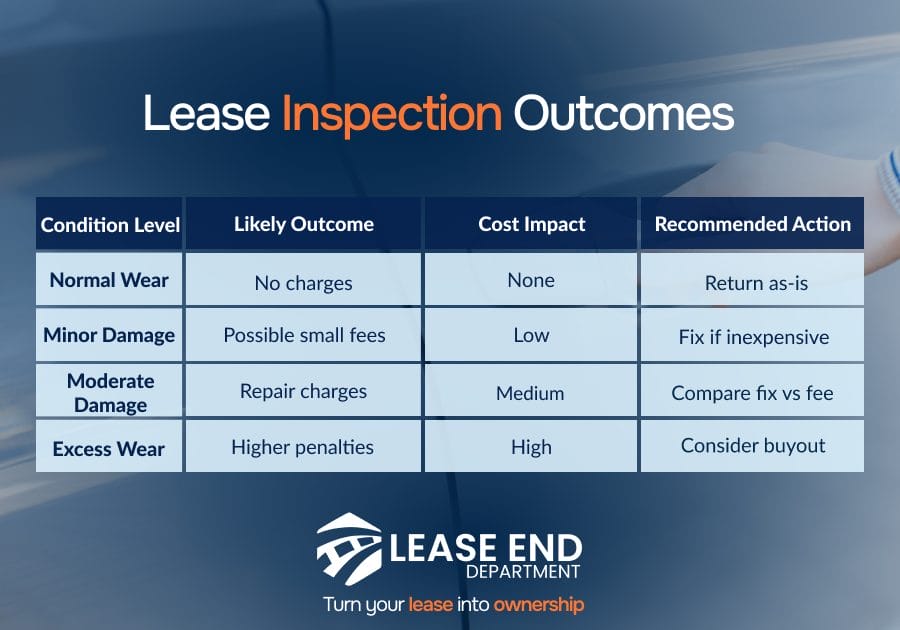
Should You Fix Damage or Leave It?
One of the most common questions before a lease-end inspection is simple.
Is it worth fixing the damage, or should you just return the car as-is?
The answer depends on the cost of the repair compared to what the leasing company is likely to charge.
When It Makes Sense to Fix the Damage
In many cases, small repairs are worth handling before the end of lease inspection.
- Minor windshield chips that can be repaired cheaply
- Light scratches or paint touch-ups
- Replacing worn tires if they’re below the acceptable limit
These fixes are often less expensive when done on your own than what you might be charged at lease-end
When It May Be Better to Leave It
Not all damage is worth fixing, especially if repair costs are high.
If the damage is more significant, such as large dents or interior replacements, it may cost more to repair it yourself than what the leasing company would charge.
In these cases, it can make sense to leave the damage and pay the fee instead.
Make Your Lease-End Inspection Work in Your Favor
End of lease inspections don’t have to be stressful or unpredictable.
Once you understand what inspectors look for and how charges are determined, the process becomes much more manageable.
Small steps like preparing your vehicle, reviewing potential damage, and knowing what’s worth fixing can make a noticeable difference in your final costs.
But for many drivers, the inspection is just one part of a bigger decision.
Should you return the car, or keep it?
That’s where Lease End Department can help.
Instead of navigating the process alone, you can get clear guidance on your next move, whether that means minimizing inspection charges, exploring a lease buyout, or comparing all your lease buyout options side by side.
Why drivers choose Lease End Department:
- Understand your options clearly: Return, buyout, or next steps explained side by side
- Avoid unnecessary fees: Get guidance on repairs vs charges
- Explore financing options: If keeping your vehicle makes more sense
- Skip dealership pressure: Make decisions on your terms
- Simple, guided process: From evaluation to paperwork
With the right approach, your lease-end inspection becomes less about surprises and more about making a smart, informed decision.
End of Lease Inspection: FAQs
What happens during an end of lease inspection?
During an end of lease inspection, a third-party inspector checks your vehicle’s condition, mileage, and any damage beyond normal wear. You’ll receive a report outlining potential charges before returning the car.
Is a lease return inspection required?
In most cases, yes. Leasing companies require an inspection to assess the vehicle’s condition and determine if any excess wear or mileage charges apply.
What is considered normal wear and tear on a lease?
Normal wear includes minor scratches, small chips, and light interior use. Anything more significant, like deep dents, torn seats, or cracked glass, may be considered chargeable damage.
Can I fix damage before my lease inspection?
Yes, and it’s often recommended. Fixing small, affordable issues ahead of time can cost less than what the leasing company might charge at car lease-end.
How far in advance should I schedule my lease inspection?
Most drivers schedule their inspection 15-45 days before lease-end. This gives you time to review the report and address issues if needed.
What happens after the lease inspection?
After the lease-end inspection, you’ll receive a condition report with estimated charges. You can choose to fix certain issues before returning the vehicle or proceed with the return as-is.
Do I still need an inspection if I buy out my lease?
In many cases, no formal inspection is required if you buy out your lease. However, understanding your vehicle’s condition can help you make a better financial decision.
Can Lease End Department help with lease-end inspections?
Yes. Lease End Department helps you review inspection results, compare repair vs. buyout options, and guide you through the next steps so you can avoid unnecessary costs.