Buick Lease Buyout: Key Takeaways
- A Buick lease buyout is often about keeping what already works. If the vehicle has been reliable, comfortable, and fits your lifestyle, ownership may be worth considering
- The buyout price is only part of the cost. Taxes, registration fees, financing, insurance, and future maintenance all affect the total ownership picture
- Compare the buyout to the cost of replacing the vehicle. In some cases, keeping your Buick may be more affordable than starting over with a newer model
- Take time to evaluate all your lease-end options. Buying, leasing again, or returning the vehicle each comes with different financial and ownership trade-offs
Sometimes the smartest vehicle decision isn’t getting something new.
It’s keeping the vehicle that’s already working well for you.
That idea resonates with many Buick drivers. Buick consistently ranks among the top automotive brands for dependability in J.D. Power’s U.S. Vehicle Dependability Study, helping explain why many owners choose to keep their vehicles longer than originally planned.
By the time your lease ends, your Buick is no longer an unknown. You know how it drives, how it’s been maintained, and whether it still fits your daily routine. That familiarity can make a lease buyout surprisingly appealing, especially when replacing a vehicle often comes with higher prices and higher monthly payments.
If you’re approaching the end of your Buick lease, the goal isn’t simply deciding whether you can buy the vehicle.
It’s figuring out whether keeping it delivers more value than starting over.
This guide walks through the Buick lease buyout process, financing options, costs, and key factors to help you make a confident lease-end decision.
Why Buick Lease-End Decisions Are Often About Comfort, Not Excitement
For many Buick drivers, lease-end isn’t about chasing the newest model or the latest trend.
It’s about deciding whether the vehicle they’ve been driving still delivers the comfort, reliability, and value they originally wanted.
That’s what makes Buick lease buyouts a little different from some other brands. By the time the lease ends, many owners have settled into a vehicle that fits their routine. They know how it drives, what maintenance it needs, and whether it still meets their everyday needs.
At the same time, replacing a vehicle can be expensive. A newer model may come with a higher payment, a larger down payment, or features you may not actually need.
Before making a decision, consider:
- How satisfied you’ve been with the vehicle
- Whether it still fits your lifestyle
- How the buyout cost compares to replacement costs
- How long you plan to keep the vehicle
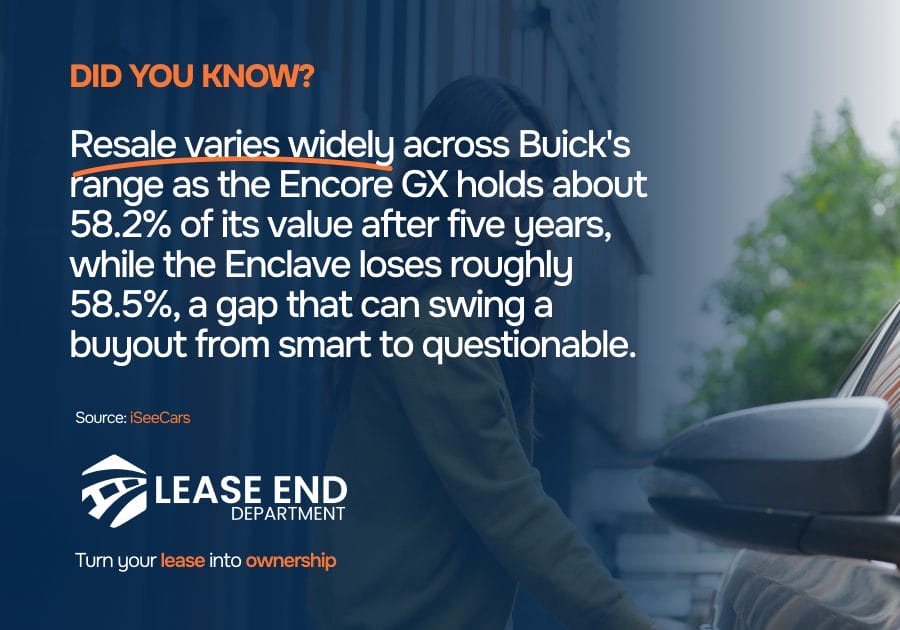
Should You Keep Your Buick or Start Fresh?
When a Buick lease ends, most drivers face three choices: buy the vehicle, start another lease, or return it and move on.
The right answer depends less on the lease itself and more on what makes sense for your budget, driving habits, and future plans.
Buying Your Buick
A lease buyout can be appealing if you’ve been happy with the vehicle and plan to keep it for several more years.
Buying may make sense if:
- The buyout price compares favorably to market value
- The vehicle has been dependable
- You want to avoid shopping for another vehicle
- Ownership costs fit your budget
For many Buick drivers, familiarity is one of the biggest advantages. You already know the vehicle’s history, condition, and maintenance record.
Starting Another Lease
Leasing again allows you to upgrade to a newer model while maintaining predictable monthly payments.
Potential benefits include:
- Newer technology and safety features
- Warranty coverage
- Lower repair concerns during the lease term
The trade-off is that you’ll continue making payments without building ownership.
Returning the Vehicle
Returning the lease may be worth considering if your needs have changed or if the buyout doesn’t represent good value.
This option can make sense if:
- You need a different type of vehicle
- The vehicle has excessive wear or mileage
- The buyout price exceeds market value
- You’re ready to explore other brands or ownership options
The Numbers Behind a Buick Lease Buyout
A Buick lease buyout can look straightforward at first glance.
You receive a payoff quote, compare a few financing options, and decide whether to move forward.
In reality, the smartest buyout decisions come from understanding both the immediate costs and the long-term ownership expenses that follow.
What You’ll Pay Up Front
Most Buick buyouts include:
- Residual value
- Sales tax
- Registration fees
- Title fees
For example, a Buick Enclave buyout might look something like this:
- Residual value: $24,000–$32,000
- Taxes and fees: $1,500–$3,500
That means the amount needed to complete the purchase can be several thousand dollars higher than the residual value listed in your lease agreement.
What You’ll Pay After the Buyout
Once you become the owner, you’ll also be responsible for ongoing costs such as:
- Routine maintenance
- Insurance premiums
- Repairs after warranty coverage expires
These expenses don’t always show up in buyout calculators, but they can significantly affect the total cost of ownership over time.
The Cost Most Drivers Don’t Calculate
Many lease-end decisions focus on today’s numbers.
The better approach is to think about the next three to five years.
If your Buick continues to be reliable and fits your needs, spreading the buyout cost across several years of ownership can make the purchase more attractive than replacing the vehicle.
Financing Your Buick: Looking Beyond the Monthly Payment
Financing can have a bigger impact on the total cost than many drivers realize.
A lower monthly payment may seem appealing, but it doesn’t always result in the lowest overall cost.
Example Loan Scenario
Let’s assume you’re financing $28,000 for 60 months.
At 6.0% APR, your monthly payment would be approximately $541, and you’d pay about $4,500 in total interest over the life of the loan.
At 7.5% APR, the monthly payment increases to roughly $561, with total interest costs climbing to approximately $5,700.
That’s only about $20 more per month, but roughly $1,200 more in interest over the loan term.
GM Financial vs Banks and Credit Unions
Many drivers begin with financing through GM Financial because it’s convenient.
However, it’s often worth comparing offers from:
- Banks
- Credit unions
- Online lenders
Even a small improvement in APR can lower both your monthly payment and your total borrowing cost.
The Value of Getting Pre-Approved
Getting pre-approved before finalizing your buyout can help you:
- Understand your budget
- Compare financing offers with confidence
- Avoid unnecessary financing markups
- Negotiate from a stronger position
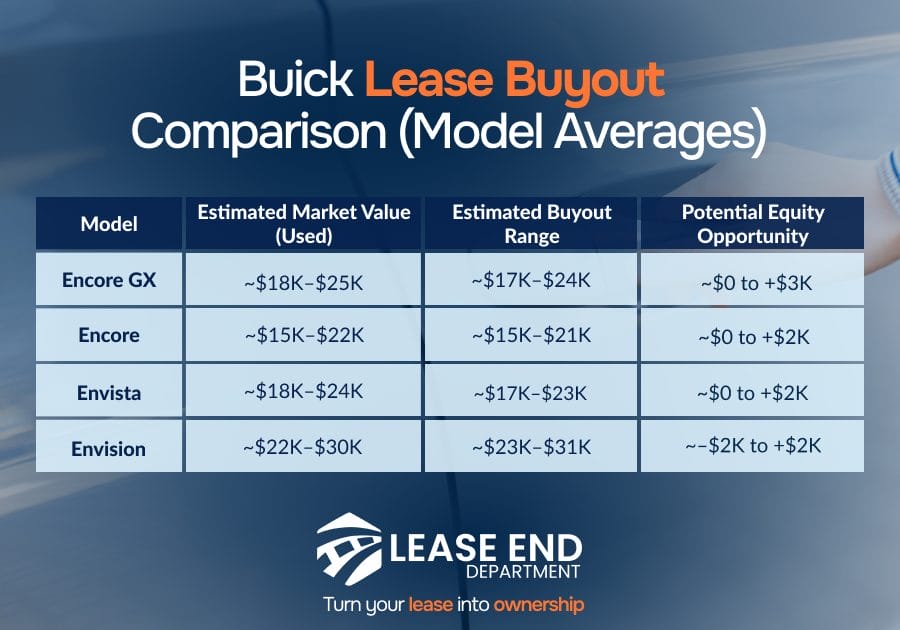
Your Buick Lease-End Decision Should Feel Comfortable, Not Complicated
One of the biggest advantages Buick drivers have at lease-end is familiarity.
You’ve already spent years with the vehicle. You know how it drives, how it’s been maintained, and whether it still fits your daily routine. That makes evaluating a lease buyout much easier than shopping for an unfamiliar replacement vehicle.
For some drivers, buying out the lease is a practical way to keep a vehicle they trust while avoiding the cost of starting over. For others, a new lease or different vehicle may be the better fit. The right choice depends on your buyout price, financing options, ownership costs, and long-term plans.
The important thing is not to make the decision based on a single number.
Take time to evaluate the full picture, including taxes, fees, financing, maintenance, and how long you expect to keep the vehicle.
Why Buick drivers turn to Lease End Department:
- Review your payoff quote and total buyout cost
- Compare financing options from multiple lenders
- Evaluate buyout, return, and replacement scenarios
- Simplify title, registration, and paperwork requirements
A Buick lease buyout isn’t about finding the most exciting option. It’s about finding the option that delivers the most value and peace of mind.
Buick Lease Buyout: FAQs
Can you buy out a Buick lease early?
Yes. Many Buick leases allow for an early lease buyout before the scheduled lease-end date. However, the payoff amount may include remaining lease payments, fees, and taxes, so it’s important to request an official payoff quote before making a decision.
How is a Buick lease buyout calculated?
A Buick lease buyout is typically calculated using the vehicle’s residual value, plus any applicable purchase option fees, taxes, and remaining lease obligations if you’re purchasing the vehicle before the lease ends.
Do you pay sales tax on a Buick lease buyout?
In most states, yes. A Buick lease buyout is generally treated as a vehicle purchase, meaning state and local sales taxes usually apply. The amount depends on your location and the buyout price.
Can you finance a Buick lease buyout?
Yes. Buick lease buyouts can often be financed through GM Financial, banks, credit unions, and online lenders. Comparing multiple lenders may help you secure a lower interest rate and reduce your overall borrowing costs.
Is buying out a Buick lease worth it?
A Buick lease buyout may be worth considering if the vehicle has been reliable, the buyout price compares favorably to current market values, and you plan to keep it for several more years. Comparing the cost of ownership to the cost of replacing the vehicle can help determine whether a buyout makes financial sense.
Can you negotiate a Buick lease buyout price?
In most cases, the residual value is established when the lease is signed and cannot be negotiated. However, you may still be able to save money by comparing financing offers and understanding all fees associated with the transaction.
Should I buy my leased Buick or return it?
If your leased Buick still fits your needs, has been dependable, and the buyout price is competitive, purchasing the vehicle may be a smart option. If you’re looking for newer features, different vehicle capabilities, or lower long-term ownership risk, returning or selling the vehicle may make more sense.
Is a Buick Enclave lease buyout worth it?
For many Enclave drivers, a lease buyout can be attractive because replacing a similarly equipped SUV may cost significantly more. The decision ultimately depends on the buyout price, vehicle condition, financing costs, and your long-term ownership plans.