Jeep Lease Buyout: Key Takeaways
- Every lease comes with a built-in buyout price, called the residual value, typically 50% to 60% of your Jeep’s original MSRP
- You don’t have to wait until the lease ends. Early lease buyouts are possible and may help you avoid mileage overages or wear-and-tear fees
- You don’t need to go through the dealership. Most Jeep lease accounts are handled by Chrysler Capital or Ally, so you can skip the upsells and go straight to the source
- Some Jeeps hold their value incredibly well. Wranglers, Grand Cherokees, and Compasses often outperform their residuals, making them ideal buyout candidates
- If your market value is higher than the payoff, you’re sitting on equity. That equity can become leverage, trade-in value, or just money you keep
You didn’t lease a Jeep to stay in your lane. You leased it to climb, cross, haul, or maybe just breathe easier on open backroads. And now that your lease is ending, the road forks again.
One path sends you back to the dealership. The other lets you keep the Jeep that’s already earned its place in your driveway.
And the value? It’s real. For example, Jeep Wranglers retain nearly 70% of their value after five years, making them one of the most resilient resale performers on the road.
This isn’t just about numbers, it’s about ownership, timing, and whether your Jeep still fits the life you’re building.
In this guide, we’ll walk you through:
- How the Jeep lease buyout process works
- What fees, taxes, and payoff amounts you’ll need to consider
- Pros and cons of keeping vs. returning your Jeep
- Financing options that go beyond the dealership
- Mistakes to avoid so you stay in control
Before You Buy It Out, Know What You’re Really Getting Into
Buying your leased Jeep can make sense, but it’s worth reviewing the numbers before committing. Liking the vehicle isn’t enough. The payoff amount, fees, and market value should all line up.
Here’s what you’re really saying yes to when you consider a Jeep lease buyout:
- You’re locking in your residual value. This is the price pre-set in your lease agreement, usually 50%-60% of your Jeep’s original MSRP (could be less or more, depending on the agreement). It doesn’t change with the market, which can be good or limiting
- You’re choosing between early buyout or lease-end buyout. If you’re under your mileage and your Jeep’s in great shape, waiting might make sense. If you’ve added wear, miles, or upgrades, an early buyout could save you money in end-of-lease penalties
- You’re not required to go through the dealership. Most Jeep leases are handled by Chrysler Capital or Ally, which means you can go direct: no sales pressure, no trade-in games, no added markup
- You’re betting on your Jeep’s market value. Models like the Wrangler, Grand Cherokee, and Compass often outperform their predicted depreciation. That means your Jeep might be worth more than what you’d pay to buy it, giving you equity the moment you own it
How the Jeep Lease Buyout Process Works
If you’re considering keeping your Jeep, the process is straightforward once you know the steps.
1. Request Your Lease Payoff Quote
Before you make any move, know your number. It’s the foundation of every buyout decision, and it starts with a payoff quote.
What you’ll see in your quote:
- The residual value (your pre-set buyout price from the lease agreement)
- Sales tax, based on your state
- Any remaining lease payments if you’re buying out early
Example: A 2020 Jeep Wrangler with a $39,000 MSRP might have a residual of $22,000, making it a candidate for a value-smart buyout.
2. Check Your Jeep’s Current Market Value
Liking your Jeep isn’t enough. You need to know if it’s worth what you’d pay to keep it.
Where to get your estimate:
- Use trusted tools like Kelley Blue Book, CarMax, Edmunds, or Carvana
- Compare your buyout quote vs. actual market value
- If your Jeep is worth more than the payoff, you’ve got equity in your hands
Pro tip: Aftermarket mods like lift kits or tires may not boost market value, but they don’t impact your buyout price either. You’re buying the Jeep you built.
3. Decide When to Buy: Now or at Lease-End
Timing is more than a date on the calendar. It’s a strategy.
What to consider:
- Early buyouts may include fees or remaining payments
- Lease-end buyouts are cleaner, but can come with wear-and-tear charges or over-mileage penalties
- Your decision should weigh condition, mileage, and monthly budget
Off-roading often? An early buyout could save you from inspection stress.
4. Pick a Payment Path: Cash or Financing
Buying doesn’t have to mean draining your savings. You’ve got options.
Here’s how:
- Chrysler Capital might or might not offer lease-end financing
- Lease End Department provides fast pre-approvals, no upsells, and transparent rates
- You can also shop credit unions or banks for competitive terms
Estimate: A $23,000 buyout financed over 60 months at 6.5% APR = ~$450/month
5. Take Ownership as The Jeep Is Yours
Once payment is made and the title is transferred, the Jeep is legally yours.
How to wrap it up easily:
- Pay Chrysler Capital or your lender directly
- Transfer the title, register your Jeep, and handle plate issuance
- Or let Lease End Department take care of it all, fully online
Jeep Lease Buyout Costs, Fees, and Taxes
Before you sign anything, it’s smart to know what your Jeep will really cost you. A lease buyout includes more than the residual value, and surprise charges can quickly turn a good deal into a bad one. Let’s break it down.
What You’ll Typically Pay
- Residual value: This is your Jeep’s pre-set purchase price, agreed upon at the start of your lease. Most fall between 50% and 60% of the original MSRP. If your Jeep originally cost $40,000, expect a residual of around $20,000-$24,000
- Purchase option fee: Usually spelled out in your lease agreement. Most Jeep leases charge $300-$400 to complete the buyout. This is often non-negotiable, and the price can differ from the estimate
- Sales tax: Most states apply 6%-10% sales tax on the buyout price. For example, in a 7% state, a $22,000 payoff means $1,540 in taxes
- Title and registration fees: Expect to pay $150-$400 to officially transfer ownership and get new plates
- Early termination fee (if you buy out early): If you’re buying out before the lease ends, you may owe remaining payments or a flat early payoff penalty, depending on your contract
- Inspection fee (optional): Dealerships may recommend one, but it’s not required if you’re buying. And you’re not charged for dents, dings, or mods
Real-World Example
2020 Jeep Grand Cherokee
- MSRP: $40,000
- Residual value: ~$22,000
- Sales tax (7%): $1,540
- Fees (Option + Title): ~$400
- Total estimated buyout: ~$24,000
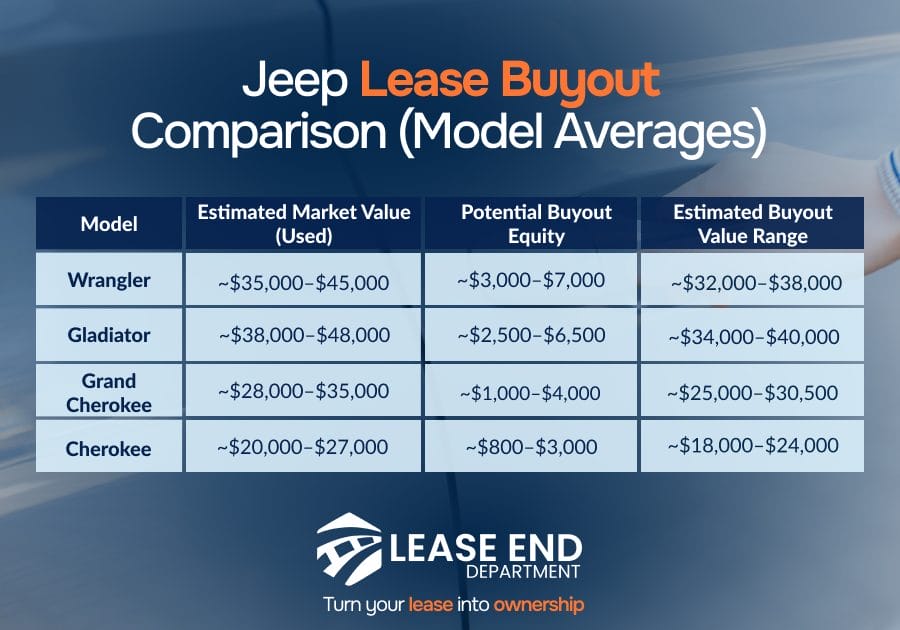
Pros and Cons of Buying Your Leased Jeep
Every decision comes with trade-offs. Buying out your lease isn’t just about keeping the Jeep you love, it’s about owning the numbers, the freedom, and the long-term ride. Here’s what to weigh
Pros
- You keep a Jeep that already fits your life, from trail runs to snowy commutes, no adjustment period required
- You skip end-of-lease fees for wear, tear, or mileage overages that can easily run into the thousands
- You may walk away with equity, especially if your Jeep is worth more than your buyout price, common with models like the Wrangler
- You avoid the dealership dance: no last-minute upsells, hidden markups, or trade-in pressure
Cons
- You’ll need to finance or pay out of pocket, which could mean a new monthly payment or cash reserve
- Your Jeep may be out of warranty, and off-roaders or older models may start needing repairs soon
- New models or leases could offer better rates, tech, or incentives, depending on timing and inventory
Financing Options for a Jeep Lease Buyout
Ownership starts with a choice, not just to keep your Jeep, but how you pay for it. And just like your Jeep, your financing path should fit your terrain.
Option 1: Pay Cash
- No interest, no monthly payment
- Great if you’ve budgeted ahead or have trade-in equity
- But it ties up capital that might serve you better elsewhere
A smart move if you plan to keep your Jeep long-term and avoid new debt.
Option 2: Finance Your Buyout
Chrysler Capital doesn’t always offer lease-end financing. Many drivers need to look elsewhere.
Lease End Department specializes in off-lease financing with:
- Fast online pre-approvals
- Competitive rates tailored for used vehicles
- No dealership markup, no upsells
You can also compare rates from banks or credit unions
Sample estimate: A $24,000 buyout over 60 months at 6.5% APR = ~$470/month
Pro tip: Pre-approval gives you the power to walk into (or away from) the dealership knowing your numbers. It can also help you spot a bad offer before it costs you.
How Lease End Department Can Help With Your Jeep Lease Buyout
You chose a Jeep for freedom and flexibility. Your lease buyout should offer the same.
At Lease End Department, we help drivers move from leasing to ownership without the pressure, guesswork, or dealership detours.
Here’s how we make it easier:
- Fast, fully online pre-approvals so you can see your financing terms before the dealership even gets involved
- No dealer markups or last-minute upsells: just clear, competitive numbers based on your payoff
- We handle the paperwork for you, from loan processing to title transfer, DMV filing, and plate delivery
- All digital, all on your schedule, so you can complete your lease buyout without ever stepping into a showroom
Besides Jeep, we also specialize in lease buyouts for additional popular brands, including:
Jeep Lease Buyout: FAQs
What is a Jeep lease buyout?
A Jeep lease buyout gives you the option to purchase your leased Jeep, either before your lease ends or at the end of the lease’s term, for a pre-set price called the residual value.
How do I buy out my Jeep lease?
You can buy out your Jeep lease by requesting a payoff quote from your leasing company (usually Chrysler Capital or Ally), comparing the buyout price to your Jeep’s market value, securing financing or paying in cash, and completing ownership paperwork.
Can I buy my Jeep before the lease ends?
Yes, you can do an early Jeep lease buyout, but it may include remaining payments or early termination fees. It’s a smart move if your Jeep has high mileage, excess wear, or strong resale value.
Who do I contact for a Jeep lease payoff?
Most Jeep lease accounts are serviced by Chrysler Capital or Ally Financial. You can request your lease payoff quote online or by phone directly through them, no dealership required.
Is it better to return or buy out my Jeep?
That depends on your Jeep’s market value vs. residual, current condition, and how much you like it. If your vehicle is worth more than your payoff, or if you’ve outdriven your mileage limit, buying it out could save (or earn) you money.
Does Lease End Department offer Jeep lease buyout financing?
Yes. Lease End Department offers fast online pre-approvals, competitive rates, and full support with Jeep lease buyouts, including title transfer, DMV paperwork, and plate delivery.