Trading in a Leased Car: Key Takeaways
- You can trade in a leased car, but it all comes down to the numbers. Your payoff vs. your car’s value determines whether you gain equity or take on extra cost
- Equity is everything. Positive equity can lower your next payments, while negative equity can quietly increase what you owe
- Trading in is about convenience, not always savings. It’s the fastest way to switch vehicles, but not always the most cost-effective option
- Always compare before you commit. Looking at trade-in vs. lease buyout side by side can reveal which option puts you in a better financial position
Leases are designed to run their full term. But in reality, many drivers don’t wait that long.
Needs change. Priorities shift. And sometimes, the car that made sense two years ago doesn’t fit today.
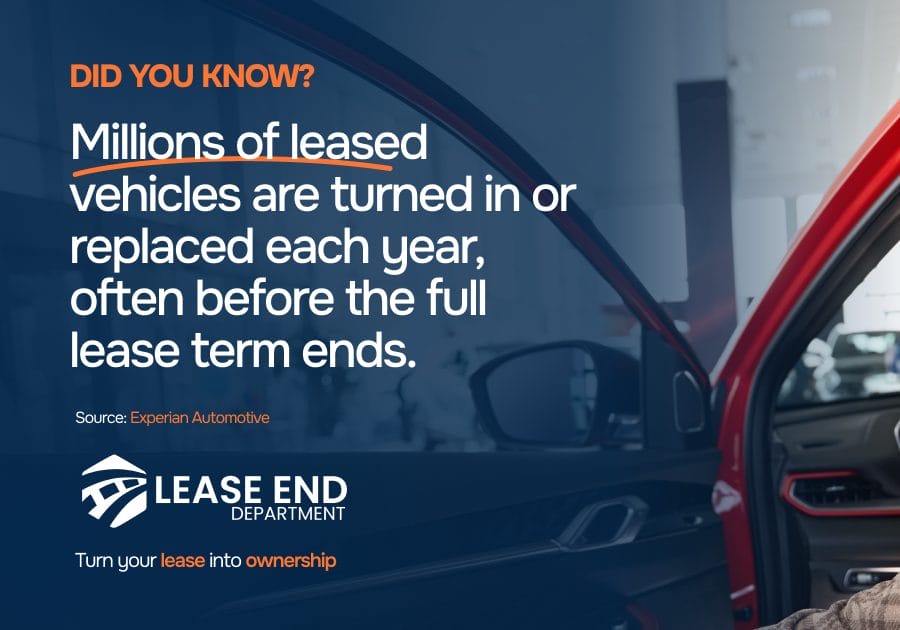
You’re not alone in thinking about switching early. In fact, millions of leased vehicles are turned in or transitioned before their full term each year, often as drivers look to upgrade, reduce payments, or adjust to new financial situations.
That’s where the question comes in.
Can you trade in a leased car?
The answer is yes, but it’s not as simple as trading in a car you own. It comes down to your lease payoff, your vehicle’s current value, and whether you have equity or not.
In this guide, we’ll cover:
- How trading in a leased car works
- What lease payoff and equity mean
- When trading in makes financial sense
- The steps involved in the process
- Fees and risks to watch out for
Can You Trade In a Leased Car? What to Know First
Yes, you can trade in a leased car, but the process isn’t the same as trading in a vehicle you own.
With a lease, the leasing company still owns the car, not you. That means before anything else happens, the remaining balance on the lease, known as the payoff amount, must be settled.
Why It Works Differently
When you trade in a financed vehicle, you’re working with something you own or are paying off directly. With a lease, you’re essentially transferring the vehicle from the leasing company to a new buyer, usually a dealership.
The dealership will:
- Request your lease payoff amount
- Compare it to your vehicle’s current value
- Pay off the lease if you move forward with the trade-in
Who Can Handle the Trade-In
Most lease trade-ins are handled through dealerships, but in some cases, third-party buyers may also be involved.
Dealerships are the most common route and handle the payoff directly.
Third-party companies may also purchase the vehicle, depending on lease terms.
However, not all leases allow third-party buyouts. Some lenders restrict who can purchase the vehicle, which can limit your lease buyout options.
The Key Thing to Understand
Everything comes down to one number: your lease payoff.
Before trading in your leased car, you’ll need to know:
- How much you owe to end the lease
- What your car is currently worth
The difference between those two numbers determines whether trading in your lease helps or costs you.
Step by Step: How to Trade In a Leased Car
Trading in a leased car involves a few extra steps, but once you understand the process, it becomes much easier to navigate. The key is to understand your numbers before making a decision.
Step 1: Request Your Lease Payoff Quote
Start by contacting your leasing company to get your official payoff amount.
This typically includes:
- Residual value
- Remaining payments (if trading in early)
- Taxes and administrative fees
This number is the foundation of your trade-in decision.
Step 2: Check Your Car’s Market Value
Next, determine what your car is currently worth.
Use sources like Kelley Blue Book, Edmunds, or dealer offers to get a realistic estimate. This gives you a clear comparison point against your payoff amount.
Step 3: Calculate Your Equity Position
This is where the decision starts to take shape.
If your vehicle is worth more than your payoff, you have positive equity, which can be applied toward your next car. If it’s worth less, you have negative equity, which may increase your next loan or lease cost.
Understanding this gap is critical before moving forward.
Step 4: Get Multiple Trade-In Offers
Don’t settle for the first offer you receive.
- Compare offers from multiple dealerships
- Check online buyers if allowed by your lease
- Look for the highest valuation, not just convenience
- Even a small difference in offers can impact your total cost.
Step 5: Complete the Transaction
Once you accept an offer, the dealership will handle most of the process.
They will pay off your lease directly, apply any equity if available, and help you transition into your next vehicle. If there’s negative equity, it may be rolled into your new agreement.
How Trading in a Leased Car Actually Works
Trading in a leased car may sound complicated, but the process follows a clear sequence. The key difference is that the leasing company must be paid off first before any trade-in can happen.
The Basic Process
At a high level, the dealership handles most of the work, but everything starts with understanding your vehicle’s value compared to your lease payoff.
- The dealer evaluates your vehicle’s current market value
- They request your lease payoff amount from the leasing company
- They compare the value vs payoff
- If your car is worth more, you have positive equity
- If it’s worth less, the difference becomes negative equity, which may be rolled into your next deal
This comparison determines whether trading in your lease benefits you financially.
Who Handles the Transaction
In most cases, the dealership manages the entire process on your behalf.
They will:
- Buy out your lease directly from the leasing company
- Handle the payoff and paperwork
- Apply any equity, or carry over a remaining balance
From there, you transition into your next step, whether that’s:
- A new lease
- A loan to finance another vehicle
The Key Takeaway
You’re not trading in the car the same way you would if you owned it. Instead, you’re transferring the lease through a payoff, with the dealership acting as the intermediary.
That’s why understanding your payoff and your car’s value upfront is critical before moving forward.
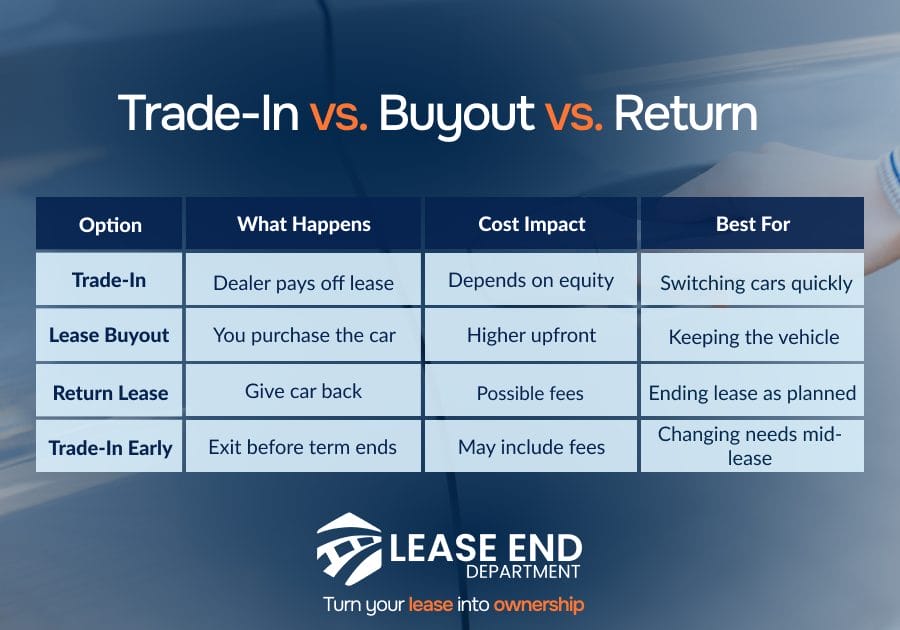
Trading In vs. Lease Buyout: Which Is Better?
When your lease is nearing the end, two common options stand out. You can trade in the vehicle and move on, or buy it out and keep it.
The right choice depends on your financial position and what you want long term.
Trading In Your Leased Car
Trading in is typically the faster way to transition into something new.
- You can switch vehicles quickly
- Any positive equity can be applied toward your next lease or loan
- The dealership handles the payoff and paperwork
This option works best if you’re ready for a different car and your current lease has favorable equity or manageable costs.
Buying Out Your Lease
A lease buyout allows you to keep the vehicle you’ve been driving and move into ownership.
- You keep a car you already know and trust
- You avoid starting over with a new lease
- You begin building long-term value through ownership
This option often makes sense if the buyout price is reasonable and you plan to keep the car for several years.
Which Option Makes More Sense?
At this point, it’s really about two things: equity and goals.
If your vehicle has positive equity and you want something new, trading in can be a smooth transition. If the buyout price is competitive and you prefer keeping your car, a lease buyout may offer better long-term value.
In the end, it’s not just about what you can do. It’s about which option puts you in a better position moving forward.
Make the Right Move With Lease End Department
Trading in a leased car can be a smart move, but only if the numbers work in your favor.
Between your lease payoff, your vehicle’s value, and potential equity, there’s more to consider than just switching into a new car. The right decision comes down to understanding your position and choosing the option that actually benefits you long term.
That’s where Lease End Department can help.
Instead of relying on dealership estimates or making a quick decision, you can take a step back and evaluate all your options clearly, whether that’s trading in, buying out your lease, or exploring alternatives.
Why drivers choose Lease End Department:
- Understand your lease payoff and equity clearly before making a move
- Compare trade-in vs buyout options side by side
- Access competitive financing if keeping your vehicle makes more sense
- Avoid dealership pressure and hidden markups
- Get support through the entire process, from evaluation to paperwork
The goal isn’t just to move on, it’s to make sure the next step actually works for you.
How To Trade in a Leased Car: FAQs
Can you trade in a leased car?
Yes, you can trade in a leased car. The dealership will pay off your lease balance and apply any remaining value or balance to your next vehicle.
How do you trade in a leased car?
You can start the process of trading in a leased car by checking your payoff amount and comparing it to what your car is worth. If the numbers make sense, a dealership can pay off your lease and apply any equity or remaining balance to your next vehicle.
Can you trade in a leased car early?
Yes, but trading in early may include remaining lease payments or fees. It’s important to compare your payoff amount to your car’s value first.
How does a lease payoff work when trading in?
The lease payoff is the total amount needed to buy the vehicle from the leasing company. The dealer pays this amount as part of the trade-in process.
Can you trade in a leased car for another lease?
Yes, many drivers trade in their leased car and roll into a new lease. Any positive equity can reduce your new payments, while negative equity may increase them.
What happens if you have negative equity on a leased car?
If you have negative equity, the difference is usually rolled into your next loan or lease. This can increase your monthly payments.
Is trading in a leased car a good idea?
It can be a good idea if your vehicle has positive equity or if you’re ready to switch cars. However, it’s important to review the numbers carefully.
Do all leasing companies allow lease trade-ins?
Most allow it through dealerships, but not all permit third-party buyouts. You should check your lease terms before proceeding.
Can Lease End Department help with trading in a leased car?
Yes. Lease End Department helps you understand your payoff, evaluate equity, and compare trade-in vs. buyout options so you can make the best decision.