Lease Buyout Taxes and Fees: Key Takeaways
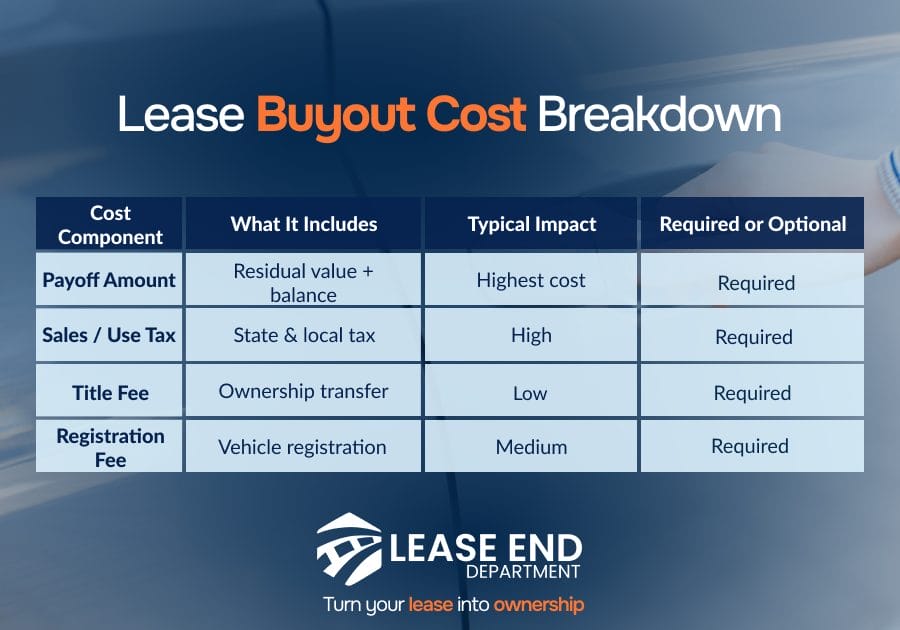
- Your lease buyout price is not your final price. Sales or use tax, title fees, and registration costs can add a significant amount on top of your payoff
- Sales tax usually applies, but rules vary by state. Most states treat a lease buyout as a purchase, though how tax is calculated depends on local laws
- Title and registration fees are required and often overlooked. These state-mandated costs can add hundreds of dollars and are separate from taxes
- The smartest move is to estimate everything upfront. Comparing your full buyout cost, including taxes and fees, helps you avoid surprises and make a more informed decision
Most drivers focus on the buyout price.
Then the taxes and fees show up. That’s where the number really changes.
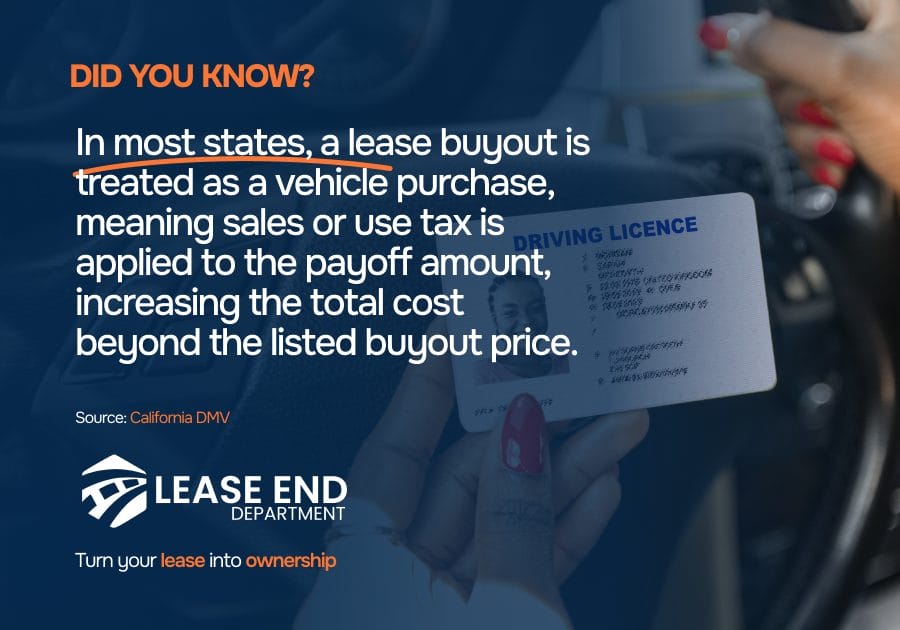
In many states, a lease buyout is treated as a vehicle purchase, which means sales or use tax is often due at the time of buyout, along with title and registration fees.
For example, the California DMV states that when a lessee purchases a vehicle at lease-end, use tax is based on the balance owed at payoff, not just the original lease terms.
And it doesn’t stop there. Depending on your state, you may also need to pay title transfer fees, registration costs, and possibly additional processing fees, all of which can vary widely based on location and how the buyout is handled.
The result is simple.
The number you see in your lease contract is rarely the number you actually pay.
In this guide, we’ll cover:
- Whether you pay sales tax on a lease buyout
- How tax is calculated and what amount is taxed
- Title and registration fees you should expect
- Why costs vary depending on your state
- How to estimate your full lease buyout cost before committing
What Taxes Usually Apply to a Lease Buyout?
When you buy out your lease, you’re not just finishing your contract. In most cases, you’re completing a vehicle purchase, and that’s why taxes apply.
The exact type and amount of tax depend on your state, but the two most common forms are sales tax and use tax.
Sales Tax vs. Use Tax
Most states apply either sales tax or use tax when you buy out your leased vehicle.
- Sales tax is charged on purchases made through a dealer or seller
- Use tax applies when a vehicle is purchased without traditional sales tax being collected at the point of sale
For lease buyouts, many states treat the transaction as a purchase and apply one of these taxes accordingly.
Why Lease Buyouts Are Taxed
Even though you’ve been making lease payments, you haven’t actually owned the vehicle.
A lease buyout is considered a transfer of ownership, which is why states often require tax to be paid at that point. This is similar to buying a used car, even though you’ve been the one driving it.
What Amount Is Usually Taxed
In many cases, the tax is applied to:
- The buyout price (residual value or payoff amount)
- Any additional fees included in the purchase
For example, if your payoff amount is $20,000 and your state tax rate is 6%, your estimated tax would be $1,200. However, the exact calculation can vary depending on your state and local tax rules.
Why Your State Matters Most
There is no single rule that applies nationwide.
Some states calculate tax based on the full buyout amount, while others include local taxes or additional fees in the calculation. That’s why it’s important to check your state DMV or tax authority guidelines before finalizing your buyout.
Registration and Title Fees After a Buyout
Taxes are usually the biggest cost drivers in a lease buyout, but title and registration fees are also required to complete the process. These are state fees, and while they are smaller, they still impact your final total.
Title Fees
When you buy out your lease, the vehicle title must be transferred into your name. This comes with a state-issued title fee.
For example:
- New York DMV collects a $50 title certificate fee
- Pennsylvania requires a $72 certificate of title fee
These are fixed, government-required fees and are typically non-negotiable.
Registration Fees
After the title is transferred, the vehicle must be registered in your name. Registration fees vary more than title fees and depend on several factors.
According to the California DMV, registration costs can be based on:
- Vehicle type
- Purchase price or declared value
- County or locality
- Weight or classification of the vehicle
Because of these variables, registration fees can differ significantly from one driver to another.
Plate and Initial Registration Charges
In addition to standard registration, some states include fees for plates or first-time registration.
Examples include:
- New York DMV: approximately $25 for standard license plates
- Florida: a $225 initial registration fee in applicable first-time registration situations
These fees may apply depending on whether you’re registering the vehicle in your name for the first time.
Why These Fees Catch Drivers Off Guard
Most drivers expect taxes. Fewer expect everything else.
Title and registration fees don’t always show up in early estimates, but payment is required to complete the transaction. Even though each individual fee may seem small, together they can add several hundred dollars to your total buyout cost.
That’s why it’s important to look beyond the payoff amount and account for all required state fees, not just the purchase price or financing fees.
Tips to Estimate Your Total Lease Buyout Cost
Before moving forward with a lease buyout, it’s important to look beyond the payoff amount and estimate the full cost of ownership. A quick step-by-step approach can help you avoid surprises.
Step 1: Request Your Official Payoff Quote
Start with your leasing company. Your payoff quote includes the base amount needed to purchase the vehicle and serves as the foundation for your total cost.
Step 2: Check Your State’s Tax Rule
Find out whether your state applies sales tax or use tax and what rate applies to your buyout. This is often the largest additional cost.
Step 3: Estimate Title and Registration Costs
Look up your state’s DMV fees for:
- Title transfer
- Registration
- Plates or initial registration (if applicable)
These are required to complete the ownership transfer.
Step 4: Ask Whether a Dealer Fee Applies
If you’re working through a dealership, ask for a breakdown of any document or processing fees. These are separate from state-required costs.
Step 5: Compare DIY vs. Dealer-Handled Buyout
Some drivers complete the buyout directly with their lender, while others go through a dealer or service provider.
Comparing both options can help you:
- Reduce unnecessary fees
- Understand what you’re paying for
- Choose the simpler or more cost-effective route
Estimated Total Buyout Formula
Estimated total buyout = payoff amount + state/local tax + title fee + registration fee + dealer/service fees
Common Mistakes Drivers Make With Lease Buyout Taxes
Lease buyout taxes are where many drivers get caught off guard, not because the rules are hidden, but because the details are easy to overlook.
One of the most common mistakes is assuming the residual value is the final price. In reality, that number doesn’t include sales or use tax, title fees, or registration costs, which can add a meaningful amount to the total.
- Another issue is forgetting about local taxes or county fees. Some locales apply additional local taxes on top of the state rate, which can increase the total beyond what drivers initially expect.
Drivers also often confuse dealer fees with state-required fees. Title, registration, and tax are government charges, while document or processing fees are added by the dealer and can vary.
- Always ask for a fully itemized breakdown so you can separate required fees from optional ones
Finally, timing matters more than most people realize. In some states, delaying title transfer or tax payment can trigger penalties.
For example, the Texas Comptroller notes that late motor vehicle tax payments can result in 5% or 10% penalties depending on how late the payment is.
The common thread is simple.
Most surprises don’t come from the tax itself, but from not seeing the full picture ahead of time.
Know the Full Cost Before You Commit With Lease End Department
A lease buyout can feel straightforward at first.
You see the payoff amount, compare it to your car’s value, and decide.
But as you’ve seen, the real number includes more than just the buyout price. Taxes, title fees, registration costs, and possible dealer charges all play a role in what you actually pay.
Understanding how these costs come together can help you avoid surprises and decide based on the full picture, not just the number in your lease agreement.
That’s where Lease End Department can help.
Instead of piecing everything together on your own, you can get a clear breakdown of your total buyout cost, including taxes and fees, and compare it to your other options.
Why drivers choose Lease End Department:
- See the full cost upfront: Payoff, taxes, and fees clearly explained
- Compare your lease buyout options: Buyout vs. return vs. next step
- Avoid unnecessary dealer fees: Know what’s required and what’s not
- Get financing support: If buying your vehicle makes sense
- Simplify the process: From payoff to title and registration
The goal isn’t just to buy your car.
It’s to understand exactly what you’re paying and make sure it’s the right move.
Lease Buyout Taxes and Fees: FAQs
Do you pay sales tax on a lease buyout?
In most states, yes. A lease buyout is typically treated as a vehicle purchase, so sales or use tax is applied based on your state’s rules.
How is sales tax calculated on a lease buyout?
Sales tax is usually calculated on the buyout price or payoff amount, though the exact calculation depends on your state and local tax rates.
If I buy out my lease, do I have to pay tax again?
Yes, in most cases you do. Even though you paid tax on your lease payments, the buyout is considered a separate purchase and may be taxed again.
Do you pay registration fees after a lease buyout?
Yes. After a buyout, you must register the vehicle in your name, which includes paying registration and possibly plate fees depending on your state.
What title fees do you pay after a lease buyout?
You’ll typically pay a title transfer fee set by your state DMV. For example, New York charges about $50 for a title certificate.
Are lease buyout taxes the same in every state?
No. Tax rates and rules vary by state, and some include local taxes or additional fees, which can significantly affect your total cost.
Do dealer fees apply to a lease buyout?
They can. If you complete your buyout through a dealership, you may be charged document or processing fees, which are separate from state-required costs.
Can you avoid sales tax on a lease buyout?
In most cases, no. Sales or use tax is required by state law, though the exact amount and timing depend on where you live.
Can Lease End Department help with lease buyout costs?
Yes. Lease End Department helps you understand your total buyout cost, including taxes and fees, so you can make a clear and informed decision.