Lease Buyout vs. Buying a Used Car: Key Takeaways
- A lease buyout and buying a used car have different costs, financing options, and ownership considerations
- The total cost of ownership includes the purchase price, taxes, fees, financing, and potential repair costs
- A lease buyout may offer more value if your vehicle’s residual value is lower than its current market value.
- Comparing your lease buyout price with similar used vehicles can help you determine which option offers the better value
Your lease is almost over, and suddenly you’re faced with a decision you probably weren’t thinking about when you first picked up the keys:
Should you keep the car you’ve been driving, or is it time to start shopping for a different used car?
At first, the answer might seem obvious. Return the lease, find a good deal on a used car, and move on. But today’s used car market isn’t quite that simple.
The average used vehicle sold for $26,043 in December 2025, and experts predict that used car prices will continue to rise, making replacement vehicles more expensive than many drivers anticipate.
That’s one reason more drivers are taking a closer look at their lease buyout option.
So, which option is actually the better value?
In this guide, we’ll compare lease buyouts and buying a used car side by side, helping you evaluate the costs, benefits, and trade-offs so you can make a confident decision when your lease comes to an end.
You’re Not Just Buying a Car. You’re Choosing What Comes Next
When your lease ends, the decision isn’t simply “keep this car or buy another one.” It’s really about choosing the ownership experience that best fits your budget, lifestyle, and long-term plans.
A lease buyout offers familiarity. You’ve already lived with the vehicle, know its maintenance history, and understand how it performs day to day. Buying a different used car, on the other hand, gives you the freedom to explore more options, but it also comes with more research and a few unknowns.
Before comparing prices, it’s worth taking a step back and thinking about what matters most to you.
Are You Happy With Your Current Vehicle?
If your leased car has been reliable, comfortable, and still meets your needs, buying it could save you the time and uncertainty of shopping for another vehicle.
Ask yourself:
- Has the vehicle been dependable?
- Are you satisfied with its performance and features?
- Can you see yourself driving it for another three to five years?
If the answer is “yes” to most of these questions, a lease buyout may deserve a closer look.
Has Your Lifestyle Changed?
Your transportation needs may look very different today than they did when you first signed your lease. Maybe your family has grown, your commute has changed, or you’re looking for better fuel economy or newer technology.
If your current vehicle no longer fits your lifestyle, buying a different used car could provide the flexibility to find something that’s a better match. Before deciding on a lease buyout, consider whether you’ll still be happy driving your current vehicle for the next several years.
How Well Do You Know the Vehicle?
One of the biggest differences between a lease buyout and buying a used car is what you already know.
With a lease buyout, you know:
- The vehicle’s maintenance history
- How it has been driven
- Any previous repairs or accidents
- How well it has met your expectations
With another used car, you’ll likely rely on vehicle history reports, inspections, and the seller’s records to understand its condition.
What’s Your Budget Beyond the Purchase Price?
The sticker price is only part of the equation. Whether you buy out your lease or purchase a different used vehicle, be sure to compare the total cost of ownership, including financing, taxes, registration fees, insurance, maintenance, and potential repairs.
Taking a few minutes to answer these questions before comparing numbers can make it much easier to decide which option is the better long-term investment.
Lease Buyout vs. Buying a Used Car at a Glance
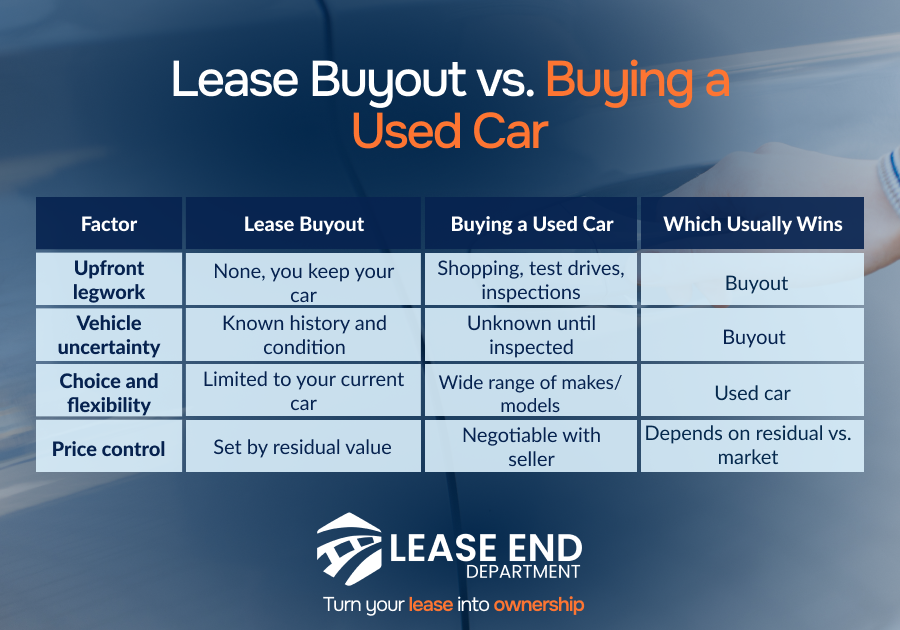
Both options can lead to vehicle ownership, but they offer very different experiences. A lease buyout gives you the confidence of purchasing a vehicle you have been driving and maintaining, while buying a used car provides more choices but often requires more time, research, and comparison shopping.
The table below highlights some of the biggest differences to consider before making your decision.
| Factor | Lease buyout | Buying a used car |
|---|---|---|
| Vehicle history | You know the maintenance and driving history | May rely on service records and vehicle history reports |
| Purchase price | Based on your lease’s residual value | Based on the vehicle’s current market value |
| Shopping required | No, you’re keeping your current vehicle | Yes, you’ll need to compare vehicles and prices |
| Negotiation | Usually limited | Often possible, especially with private sellers or dealerships |
| Vehicle inspection | You’re already familiar with its condition | A pre-purchase inspection is strongly recommended |
| Immediate availability | Yes, you already have the vehicle | Depends on inventory and availability |
| Maintenance history | Fully known | May be incomplete or unavailable |
| Paperwork | Typically involves the lease payoff and title transfer | Purchase agreement, financing, registration, and title transfer |
| Risk of unexpected repairs | Generally lower because you know the vehicle | Potentially higher if issues weren’t identified before purchase |
Key takeaway: A lease buyout offers familiarity and convenience, while buying a different used car provides more flexibility and vehicle choices. The better option depends on your budget, your confidence in your current vehicle, and whether you’re looking for something new or simply the best overall value.
The Real Cost of Each Option
The purchase price is only part of the story. Whether you buy out your lease or purchase a different used car, the total cost of ownership includes taxes, financing, fees, and potential maintenance expenses.
This is especially important in today’s market as used car prices are expected to rise by about 2% during 2026, making it even more important to compare your lease buyout price with the cost of replacing your vehicle.
Costs to Consider With a Lease Buyout
A lease buyout often comes with fewer unknowns because you’re purchasing a vehicle you’ve already been driving. However, there are still several costs to account for before making your decision.
These typically include:
- Your lease residual value (the agreed-upon purchase price)
- Sales tax, depending on your state
- Purchase option fee, if included in your lease agreement
- Registration and title transfer fees
- Interest charges if you finance the buyout
Costs to Consider When Buying a Used Car
Buying another used vehicle gives you more choices, but it may also introduce additional expenses that aren’t obvious from the advertised price.
Common costs include:
- Purchase price based on current market value
- Dealer documentation and processing fees
- Sales tax
- Registration and title fees
- Vehicle inspection
- Immediate maintenance or repairs
- Optional extended warranty
- Financing costs
Lease Buyout vs. Buying a Used Car: Cost Comparison
The example below illustrates how total costs can differ even when two vehicles have similar purchase prices.
| Expense | Lease buyout example | Used car purchase example |
|---|---|---|
| Vehicle price | Residual value: $24,000 | Market price: $24,500 |
| Sales tax (example) | $1,440 | $1,470 |
| Purchase or dealer fees | $350 purchase option fee | $899 dealer documentation fee* |
| Registration & title | $250 | $250 |
| Immediate repairs | $0 (vehicle already known) | $1,200 (brakes, tires, battery example) |
| Estimated upfront cost | $26,040 | $28,319 |
Dealer documentation fees vary significantly by state and dealership.
The Hidden Cost Isn’t Always on the Price Tag
A used car with a lower asking price isn’t automatically the better value. If it needs new tires, brake work, or overdue maintenance shortly after purchase, the total cost can quickly exceed what you would have paid to buy out your car lease.
Likewise, a lease buyout isn’t always the cheapest option. If your vehicle’s residual value is significantly higher than its current market value, purchasing a different used car could be the more economical choice.
The best approach is to compare more than just the selling price. Before making your decision, calculate:
- Total purchase price
- Taxes and fees
- Financing costs
- Expected maintenance and repairs
- Current market value of your leased vehicle
Looking at the complete financial picture can help you determine which option offers the better long-term value, rather than simply the lowest sticker price.
Which Option Makes More Sense for You?
By now, you’ve seen that both options have advantages. The better choice depends on your current vehicle, your budget, financing, and what you expect from your next car. Instead of asking which option is “better,” ask which one better fits your situation.
A Lease Buyout May Be the Better Choice If…
Buying out your lease often makes sense when you’re happy with the vehicle you’ve already been driving.
A lease buyout may be worth considering if:
- You like your current vehicle and plan to keep it for several more years.
- It has been reliable and well maintained.
- The buyout price is competitive compared to similar used vehicles.
- You are aware of the vehicle’s maintenance and accident history.
- Rising used car prices make replacing it more expensive than expected.
For many drivers, the biggest advantage isn’t just the purchase price. It’s the confidence of knowing exactly what they’re buying.
Buying a Different Used Car May Be the Better Choice If…
Returning your lease and purchasing another used vehicle may be the smarter move if your current car no longer fits your needs or doesn’t represent good value.
You may want to shop for another vehicle if:
- You need more space, better fuel economy, or different features.
- Your lease vehicle is approaching expensive maintenance or repairs.
- The lease buyout price is higher than the vehicle’s current market value.
- You’ve found a better deal on a comparable used vehicle.
- You simply want a different make, model, or body style.
Taking time to compare several used vehicles alongside your lease buyout quote can help you determine which offers the better long-term value.
Financing Can Influence Your Decision
Even if one option has a lower purchase price, financing can significantly change the overall cost.
Whether you’re financing a lease buyout or purchasing another used car, compare loan offers from:
- Manufacturer finance companies
- Banks
- Credit unions
- Online auto lenders
Interest rates, loan terms, and lender fees can vary considerably, so accepting the first financing offer isn’t always the most affordable choice.
Why Comparing APR Matters
Even a small difference in your interest rate can have a noticeable impact on your monthly payment and the total amount you repay.
| Loan example | 6% APR | 8% APR |
|---|---|---|
| Loan amount | $25,000 | $25,000 |
| Loan term | 60 months | 60 months |
| Approximate monthly payment | $483 | $507 |
| Approximate total interest paid | $3,980 | $5,420 |
Example estimates for illustration purposes only. Actual loan terms and payments vary based on lender requirements and borrower qualifications.
Although the monthly payment increases by only about $24, the higher interest rate results in paying roughly $1,400 more in interest over the life of the loan.
Pro tip: Before committing to either a lease buyout or a used car purchase, compare at least three financing offers. Finding a lower APR can save as much as negotiating a lower purchase price.
Lease Buyout vs. Buying a Used Car: Which Is Right for You?
There’s no one-size-fits-all answer when deciding between a lease buyout and buying a different used car. The right choice depends on your vehicle, your finances, and what you need from your next car.
If you’ve enjoyed driving your leased vehicle, maintained it well, and the buyout price is competitive, purchasing the car you’ve been driving can be a practical and cost-effective decision. On the other hand, if your needs have changed or you’ve found a better value elsewhere, shopping for a different used car may be the smarter investment.
Before making your decision, compare the total cost of ownership, not just the purchase price. Review all taxes, fees, financing, maintenance, and your vehicle’s current market value. Taking a little extra time now can help you avoid unexpected expenses later.
If you’re considering a lease buyout, Lease End Department can help you compare your options, secure financing, and handle the paperwork from start to finish.
Lease Buyout vs. Buying Used Car: FAQs
Is it better to buy out my lease or buy a used car?
It depends on your situation. A lease buyout may be the better option if you’re happy with your current vehicle, know its maintenance history, and the buyout price is competitive. Buying a different used car may make more sense if you need a different vehicle or can find a better value elsewhere.
Is a lease buyout cheaper than buying a used car?
Not always. A lease buyout is based on your vehicle’s residual value, while a used car’s price reflects the current market. Compare the total cost, including taxes, fees, financing, and potential repairs, before deciding.
How do I know if my lease buyout price is a good deal?
Compare your lease payoff amount with the market value of similar vehicles in your area. If the buyout price is lower than or close to market value, purchasing your leased vehicle may be a smart financial decision.
Can I finance a lease buyout?
Yes. Many banks, credit unions, online lenders, and some manufacturer finance companies offer lease buyout loans. Comparing multiple lenders can help you secure a lower interest rate and reduce your overall borrowing costs.
Do lease buyout loans have lower interest rates than used car loans?
Not necessarily. Interest rates depend on your credit score, the lender, the loan term, and the vehicle. Shopping around for financing can help you find the most competitive rate for either option.
What fees do I pay when buying out my lease?
Depending on your lease agreement and state, you may pay sales tax, a purchase option fee, title and registration fees, and financing costs if you take out a loan.
What costs should I expect when buying a used car?
In addition to the purchase price, you may pay dealer documentation fees, sales tax, registration costs, financing charges, and expenses for inspections, maintenance, or repairs after purchase.