What Happens If You Damage a Leased Car? Key Takeaways
- Damage to a leased car doesn’t automatically mean you’ll face expensive penalties. The severity of the damage, your lease agreement, and your insurance coverage all play a role
- Understanding the difference between normal wear and excess damage can help you avoid unexpected lease-end charges
- Repairing damage before your lease inspection or choosing a lease buyout may reduce your out-of-pocket costs
- Comparing your options early, including repairing, returning, or buying out your leased vehicle, can help you make the most cost-effective decision
Discovering a new scratch, dent, or cracked windshield on your leased car can make your heart sink.
Your first thought might be, “How much is this going to cost me?”
The good news is that damage to a leased vehicle doesn’t automatically mean you’ll face a hefty bill at lease-end. In many cases, the outcome depends on the type of damage, whether it’s repaired before you return the vehicle, and what your lease agreement considers normal wear and tear.
It’s also worth remembering that you’re not alone. Everyday driving comes with unexpected surprises, from shopping cart dings to minor fender benders and chipped windshields. Leasing companies expect a certain amount of wear over the life of a lease.
Before you panic or schedule expensive repairs, it’s important to understand your options.
This guide explains what happens if you damage a leased car, what counts as normal wear versus excess damage, how lease-end inspections work, and when repairing, returning, or even buying out your lease may be the smartest move.
First Things First: Don’t Assume the Worst
If you’ve damaged your leased car, it’s easy to imagine the worst-case scenario.
Leasing companies understand that vehicles accumulate wear over time. A lease is expected to cover thousands of miles of everyday driving, so minor cosmetic imperfections are often considered part of normal use. The key is determining whether the damage falls within your leasing company’s wear-and-tear guidelines or exceeds them.
Before making any decisions, take a moment to assess the situation.
Ask yourself:
- Is the damage cosmetic or does it affect the vehicle’s safety or operation?
- Was the damage caused by normal use or an accident?
- Is it something your insurance policy may cover?
- How much would it cost to repair compared to a potential lease-end charge?
The answers to these questions will help determine your next steps.
Not Every Scratch Leads to a Charge
Small rock chips, light scratches, or minor scuffs often don’t result in additional charges if they fall within the leasing company’s acceptable wear-and-tear standards.
Damage that’s more likely to result in lease-end fees includes:
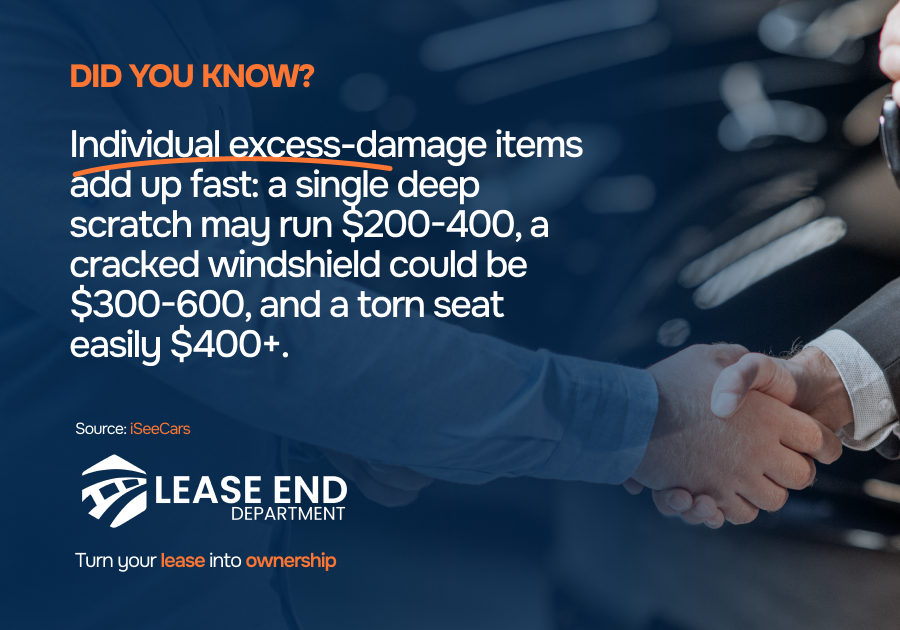
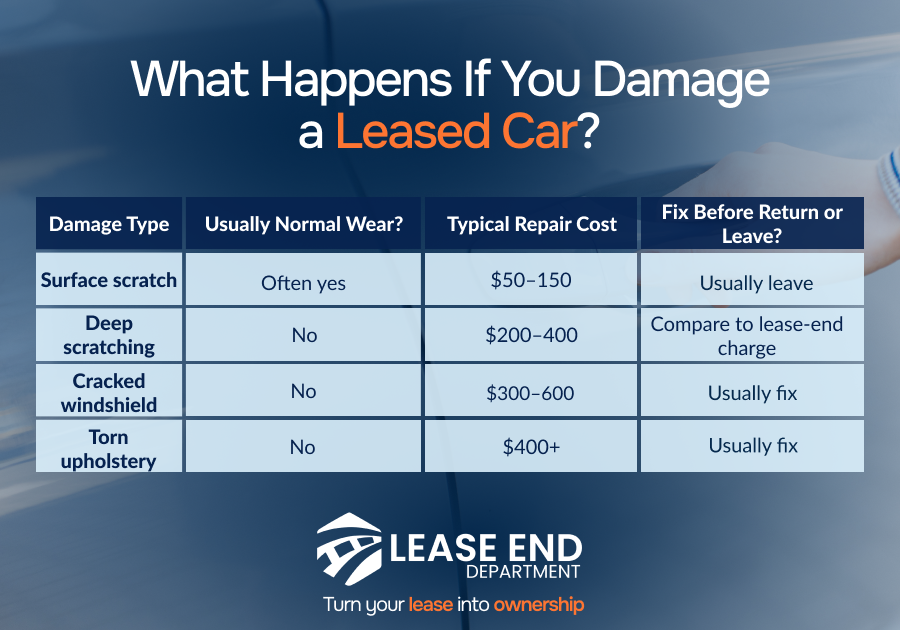
- Large dents or deep scratches
- Cracked or chipped windshields
- Broken lights or mirrors
- Damaged wheels or tires
- Interior tears, burns, or stains
The important thing is not to rush into expensive repairs without understanding how the damage will be evaluated.
Normal Wear vs. Excess Damage
Not all damage is treated the same when you return a leased vehicle.
That’s good news, because many drivers worry that every scratch or ding will result in a big lease-end bill. Leasing companies expect a vehicle to show signs of everyday use.
The goal of the inspection isn’t to find a perfect car. It’s to determine whether the vehicle has been used normally or has damage that goes beyond reasonable wear and tear.
What Usually Counts as Normal Wear?
Think about the kind of marks that naturally happen after a few years of driving.
Most leasing companies generally accept:
- Light surface scratches or small scuffs
- Minor stone chips on the hood
- Normal tire wear from everyday driving
- Small interior signs of use, such as light seat creasing or carpet wear
These imperfections are typically expected and may not result in additional charges, provided they fall within your leasing company’s wear-and-tear guidelines.
When Does Damage Become Excessive?
Damage usually becomes a concern when it affects the vehicle’s appearance, safety, or functionality.
For example, a small parking lot scuff is very different from a dented door or a cracked windshield.
Common examples of excess damage include:
- Large dents or deep scratches
- Cracked or broken glass
- Bent wheels or damaged tires
- Torn upholstery or burn marks
- Missing keys, floor mats, or factory accessories
- Broken bumpers, mirrors, or lighting components
If the damage requires significant repair before the vehicle can be resold, it’s more likely to result in a lease-end charge.
Should You Repair the Damage or Leave It Alone?
When drivers notice damage on a leased car, their first instinct is often to schedule a repair immediately.
That isn’t always the most cost-effective choice.
Depending on the type of damage, the cost of the repair, and your lease-end plans, fixing the vehicle yourself may save money. In other situations, it may make more sense to return the vehicle as-is or even consider buying out the lease.
Repairs That Usually Make Sense
Damage that affects the vehicle’s safety, functionality, or resale value is generally worth addressing before lease-end.
For example, a cracked windshield, broken headlight, or large dent is likely to attract attention during the lease inspection and may result in charges that exceed the cost of repairing the issue beforehand.
Getting estimates from a reputable repair shop can help you determine whether fixing the damage yourself is the better financial decision.
When Leaving the Damage Alone May Be the Better Choice
Not every imperfection needs immediate attention.
Small surface scratches, minor parking lot scuffs, or tiny dents may fall within your leasing company’s acceptable wear-and-tear guidelines. Even if they don’t, the lease-end charge could be less than what you’d spend on professional repairs.
That’s why it’s worth comparing repair estimates with your potential lease-end costs before making a decision.
What If Your Leased Car Was in an Accident?
An accident doesn’t automatically mean you’ll face expensive lease-end penalties.
What matters most is how the damage was handled and the condition of the vehicle when it’s returned.
It’s also common for drivers to worry about an accident appearing on a vehicle history report such as Carfax. While an accident history may affect the vehicle’s resale value, it doesn’t automatically result in a lease-end penalty. Leasing companies generally assess the physical condition of the vehicle rather than charging simply because an accident was reported.
How the Lease-End Inspection Works
Most leasing companies recommend scheduling a pre-return inspection several weeks before your lease expires. This gives you time to review the vehicle’s condition and decide whether repairing any damage is worthwhile.
During the inspection, the vehicle is typically evaluated for:
- Exterior dents, scratches, and paint damage
- Windshield, windows, and lighting
- Wheels and tires
- Interior stains, tears, and excessive wear
- Missing keys, manuals, or accessories
- Mechanical or safety-related issues
If you disagree with the inspection results or believe damage has been assessed incorrectly, you can ask the leasing company to explain the findings and, in some cases, request supporting documentation or a review of the charges.
Your Lease-End Options After Vehicle Damage
Once you know the condition of your vehicle and any potential charges, you can decide which lease-end option makes the most financial sense.
Returning the vehicle may be the simplest option, but you could be responsible for excess wear-and-tear charges if the damage exceeds your leasing company’s guidelines.
Repairing the vehicle before returning it can sometimes reduce those charges, especially if you can have the work completed for less than the leasing company’s estimated repair costs. Before authorizing repairs, it’s worth comparing independent body shop estimates with the potential lease-end fees.
A third option that’s often overlooked is buying out your lease.
If you’re planning to keep the vehicle, minor cosmetic damage becomes much less important because you’re no longer returning it to the leasing company. Instead of paying to restore the vehicle to lease-return condition, you may decide that putting those repair dollars toward ownership makes better financial sense.
| Option | Best for | Things to consider |
|---|---|---|
| Repair before return | Significant damage | Compare repair cost to potential lease-end fees |
| Return as-is | Minor damage or low repair value | You may owe excess wear charges |
| Buy out the lease | Planning to keep the vehicle | Cosmetic damage may matter less since you’re not returning it |
Damage Doesn’t Have to Define Your Lease-End Decision
Finding damage on a leased vehicle can be stressful, but it doesn’t mean you’re out of options.
Whether you’re dealing with a small scratch, a cracked windshield, or repairs from an accident, the most important step is understanding how the damage will be evaluated and what choices you have before your lease ends.
In some cases, repairing the vehicle before returning it can help reduce lease-end charges. In others, returning the vehicle as-is or even buying out the lease may be the more practical and cost-effective solution. The right decision depends on the extent of the damage, repair costs, and your plans for the vehicle.
Lease-end decisions can become more complicated when vehicle damage is involved.
Lease End Department helps drivers:
- Understand potential lease-end damage charges
- Compare repair costs with buyout and return options
- Evaluate whether purchasing the vehicle makes financial sense
- Navigate the lease-end process with greater confidence
Every lease-end situation is different, and rushing into repairs or assuming the worst can end up costing more than necessary.
Damaged Leased Car: FAQs
What happens if you damage a leased car?
If you damage a leased car, the outcome depends on the severity of the damage and your leasing company’s wear-and-tear guidelines. Minor cosmetic wear may be considered acceptable, while more significant damage could result in repair costs or lease-end charges if it isn’t addressed before returning the vehicle.
Do I have to repair damage before returning a leased car?
Not always. Some damage may fall within normal wear-and-tear standards and won’t require repairs. For more significant damage, it’s often worth comparing repair estimates with the leasing company’s potential charges to determine which option is more cost-effective.
What is considered normal wear and tear on a leased car?
Normal wear and tear generally includes minor scratches, small stone chips, light interior wear, and normal tire wear from everyday driving. Large dents, cracked glass, damaged wheels, torn upholstery, and broken components are typically considered excess damage and may result in additional charges.
Will I be charged for scratches on a leased car?
It depends on the size and severity of the scratches. Light surface scratches may be considered normal wear, while deep scratches that require repainting or bodywork are more likely to result in lease-end charges.
What happens if my leased car is damaged in an accident?
If your leased car is involved in an accident, you should report it to your insurance company and have the vehicle repaired by a qualified repair facility. If the repairs are completed properly, the accident itself doesn’t automatically result in lease-end penalties. The vehicle’s condition at the time of return is typically what matters most.
Does insurance cover damage to a leased car?
Most leased vehicles require comprehensive and collision insurance, which may cover accident-related damage after you pay your deductible. Your specific coverage depends on your insurance policy and the circumstances of the damage.
How do lease-end inspections work?
A lease-end inspection evaluates your vehicle for wear and damage before it’s returned. Inspectors typically review the exterior, interior, tires, wheels, glass, lighting, and any missing equipment to determine whether the vehicle meets the leasing company’s wear-and-tear standards.
Can I dispute lease-end damage charges?
Yes. If you believe damage charges are inaccurate or excessive, you can contact your leasing company to request an explanation of the findings and review the inspection report. Keeping maintenance records and repair documentation can also help support your case.