Lease Buyout Documents: Key Takeaways
- Having the right lease buyout documents ready can help prevent delays and keep the purchase process on track
- Most lease buyouts require key documents such as your lease agreement, payoff quote, vehicle registration, and proof of insurance
- If you’re financing your lease buyout, lenders may ask for additional financial and identity documents
- Preparing your paperwork before your lease ends can make the transition from leasing to ownership faster and less stressful
Buying out your leased vehicle is exciting. Digging through paperwork? Not so much.
The good news is that a lease buyout doesn’t have to turn into a last-minute search for missing documents. A little preparation can make the process much smoother, whether you’re paying cash or financing your purchase.
In fact, one of the first steps recommended by lenders is to gather your lease agreement, payoff quote, vehicle information, and other required paperwork before you even apply. Having these documents ready can help prevent delays and keep your lease buyout moving forward.
The exact lease buyout documents you’ll need can vary depending on your leasing company, lender, manufacturer, and state. Some drivers only need a handful of documents, while others may be asked to provide additional paperwork for financing, title transfer, or registration.
In this guide, we’ll walk through the most common lease buyout documents, explain why each one matters, and show you how to prepare everything before starting the process so you can move from leasing to ownership with confidence.
Your Lease Buyout Starts With the Right Paperwork
A lease buyout involves more than simply paying the remaining balance on your vehicle. Before ownership can be transferred, your leasing company, lender, dealership (if applicable), and state motor vehicle agency may all require specific documents to verify your identity, confirm the vehicle’s details, and complete the transaction legally.
Gathering your lease buyout documents before you begin can help prevent delays, reduce back-and-forth requests for paperwork, and make the entire process more efficient.
Why Preparation Can Save Time
Many lease buyouts take longer than expected because drivers don’t realize additional paperwork is needed until the process has already started. A missing insurance card, an outdated registration, or an expired payoff quote can delay financing approval or postpone your title transfer.
Taking a few minutes to organize your documents upfront can help you:
- Verify your lease buyout amount before making a financial commitment
- Speed up financing approval if you’re applying for a loan
- Avoid multiple trips to a dealership, lender, or DMV
- Reduce the risk of delays if your lease expiration date is approaching
Being prepared also gives you time to review your paperwork for errors before signing anything, which can help prevent problems later in the process.
What Affects the Documents You’ll Need?
There’s no universal checklist that applies to every lease buyout.
The exact paperwork depends on several factors, including:
- Leasing company: Each leasing company may have its own documentation requirements and purchase procedures
- State regulations: Title transfers, sales tax, registration requirements, and notarization rules can vary by state
- Financing or cash purchase: Financing a lease buyout typically requires additional income, identity, and lender documents, while paying cash usually involves fewer forms
- Manufacturer requirements: Some manufacturers require dealership involvement, while others allow customers to complete the lease buyout directly through their finance company
Your Lease Buyout Document Checklist
Before you contact your leasing company or apply for financing, it’s helpful to gather your paperwork in one place.
While the exact lease buyout documents may vary depending on your lender, manufacturer, and state, the checklist below covers the documents most drivers are asked to provide during the lease buyout process.
Having these documents ready can help speed up financing, reduce delays, and make the transition from leasing to ownership or selling your leased car much smoother.
| Document | Why you need it | When you’ll use it |
|---|---|---|
| Lease agreement | Confirms your lease terms, residual value, and purchase option details | At the beginning of the lease buyout process |
| Payoff quote or payoff letter | Shows the official amount required to purchase the vehicle and is often required by lenders | Before arranging financing or making payment |
| Driver’s license or government-issued ID | Verifies your identity during financing, title transfer, and ownership paperwork | Throughout the buyout process |
| Vehicle registration | Confirms the vehicle’s registration details and helps complete the ownership transfer | During title and registration processing |
| Proof of insurance | Demonstrates that the vehicle meets state insurance requirements and lender guidelines | Before the lease buyout is finalized |
| Vehicle Identification Number (VIN) | Confirms the vehicle’s identity and matches all ownership records | During financing, title transfer, and registration |
| Current odometer reading | May be required to verify mileage when transferring ownership or completing title paperwork | Near the final stages of the lease buyout |
Pro tip: Create a digital folder with scanned copies of your lease buyout documents before you begin. Having everything organized in one place makes it easier to respond quickly if your lender, leasing company, or DMV requests additional paperwork.
The Four Documents That Matter Most
While every lease buyout document plays a role in the process, four of them tend to carry the most weight.
Your Lease Agreement
This is the foundation of your lease buyout. It outlines the terms you originally agreed to and contains key information you’lllikely reference throughout the purchase process.
Before moving forward, review your agreement for:
- Your residual value (buyout price)
- Any purchase option or administrative fees
- Lease-end requirements
- Mileage or condition provisions, if applicable
- Instructions for exercising your purchase option
By knowing these details early can help you verify that your payoff quote matches your lease terms and avoid unexpected costs.
Your Payoff Quote
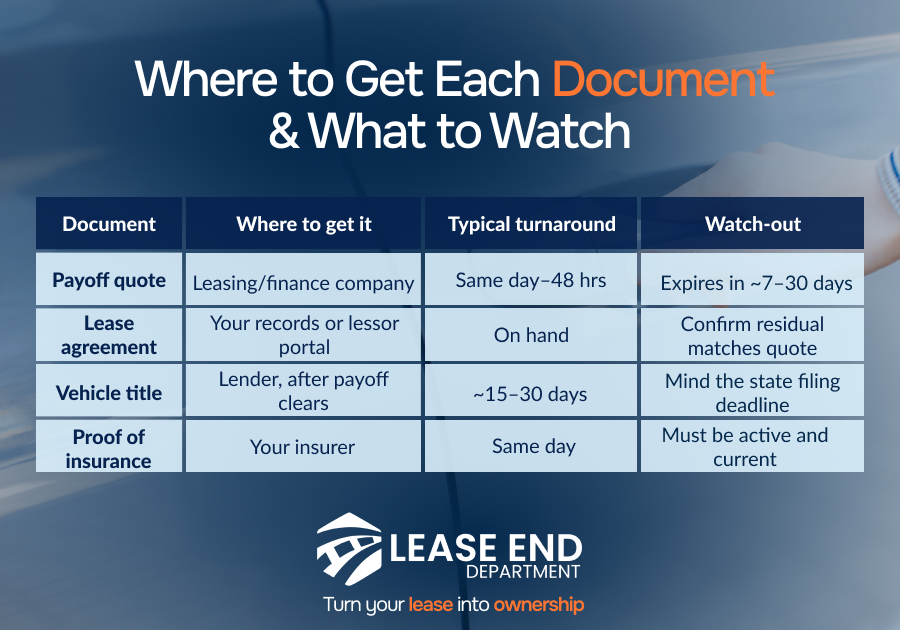
Sometimes also called a payoff letter, provides the official amount required to purchase your leased vehicle. If you’re financing the buyout, your lender will typically request this document before preparing your loan.
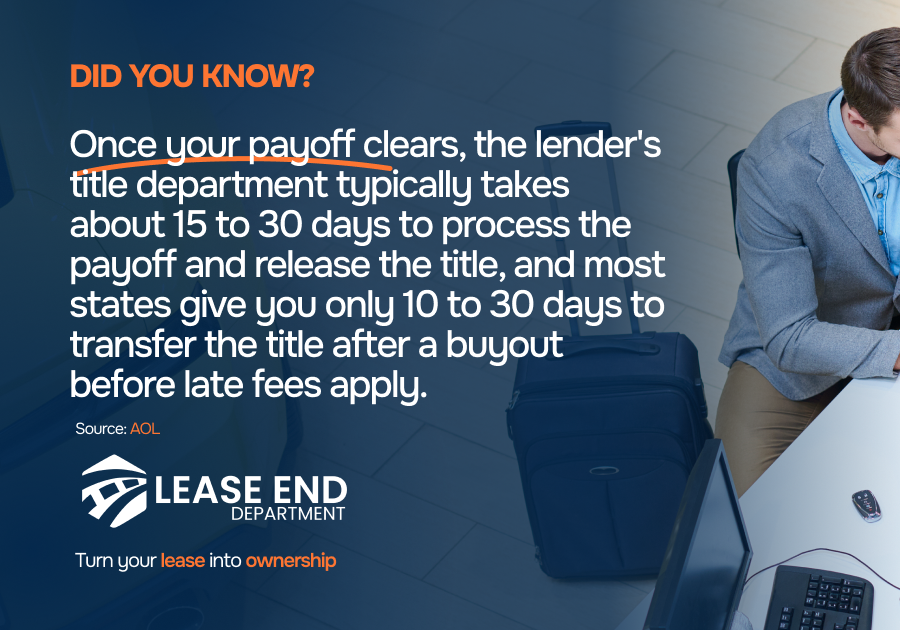
One important detail many drivers overlook is that payoff quotes usually expire after a limited period, often between seven and 30 days, depending on the leasing company. If your quote expires before the transaction is complete, you may need to request an updated version before moving forward.
Your Registration and Proof of Insurance
These documents confirm that the vehicle is properly registered and insured, which helps protect both you and the lender during the ownership transfer.
You’llgenerally need them to:
- Verify the vehicle’s registration details
- Confirm active insurance coverage
- Complete title and registration paperwork
- Meet state and lender requirements
If you’ve recently moved or changed insurance providers, make sure both documents reflect your current information before submitting them.
Your Identification
Every lease buyout requires proof of identity to protect against fraud and verify ownership. In most cases, lenders and leasing companies accept a valid government-issued photo ID.
Commonly accepted forms include:
- Driver’s license
- State-issued identification card
- U.S. passport
- Military identification (when accepted by the lender)
Before submitting your paperwork, double-check that your name matches your lease agreement and financing documents. Even small differences, such as a missing middle initial or a recent name change, can slow down the approval or title transfer process.
Financing Your Lease Buyout? You’ll Need More Than Vehicle Paperwork
If you’re paying cash for your lease buyout, the required paperwork is usually limited to your vehicle documents and ownership forms. Financing a lease buyout, however, is a different process.
Having these documents ready before you apply can help speed up the approval process and reduce requests for additional information.
Financial Documents Lenders Commonly Request
While requirements vary by lender, most lease buyout financing applications require documents that confirm your ability to repay the loan.
Be prepared to provide:
- Recent pay stubs or proof of income
- Employment verification, if requested
- Bank statements in some situations
- Proof of residence, such as a utility bill or lease agreement
- A copy of your driver’s license or other government-issued ID
Some lenders may request additional documentation depending on your credit profile or the size of the loan.
Your payoff quote is just as important as your financial paperwork. Lenders use it to verify exactly how much is needed to purchase the vehicle from the leasing company before approving your loan.
Because payoff quotes are typically only valid for a limited time, make sure yours is current, includes any applicable fees, and matches the information in your lease agreement. An expired or inaccurate payoff quote can delay financing and postpone your lease buyout.
Before You Sign Anything, Double-Check These Details
By this point, you’ve gathered your lease buyout documents and you’re almost ready to complete the purchase. Before you sign the final paperwork, take a few minutes to review the details below. Catching a small issue now can save you time, money, and unnecessary delays later.
Ask Yourself These Questions
Is the payoff amount still current?
Payoff quotes typically expire after a certain period. If yours has expired, request an updated version before completing your lease buyout.
Does the VIN match your vehicle?
Verify that the Vehicle Identification Number on your paperwork matches the VIN on your vehicle. Even a small error can delay the title transfer.
Is your insurance policy active?
Most lenders and state agencies require proof of active insurance before the ownership transfer can be completed.
Have you confirmed the total purchase price?
Review the payoff amount carefully to see whether taxes, registration costs, title fees, or other charges are included, or whether they’ll be added separately.
Have you reviewed the title and registration fees?
These costs vary by state and may not be included in your payoff quote. Understanding them in advance can help you avoid unexpected expenses.
Are all required signatures complete?
Before submitting your paperwork, make sure every required document has been signed and dated correctly. Missing signatures are one of the most common reasons paperwork is delayed.
Having the Right Paperwork Makes the Lease Buyout Process Easier
A lease buyout involves more than deciding to keep your vehicle. Having the right lease buyout documents ready before you begin can help prevent delays, simplify financing, and make the transition from leasing to ownership much smoother.
Before signing any paperwork, review your lease agreement, request an up-to-date payoff quote, verify your registration and insurance information, and confirm any state-specific title or tax requirements. Taking a little time to prepare now can help you avoid unnecessary setbacks later.
Navigating a lease buyout doesn’t have to be complicated. Lease End Department helps drivers understand the paperwork, financing requirements, and next steps so they can move through the process with confidence.
Our team can help you:
- Review your lease buyout documents
- Understand your payoff quote and purchase costs
- Explore lease buyout options
- Navigate the title, registration, and ownership transfer process
Whether you’re just starting to gather your paperwork or you’re ready to complete your lease buyout, Lease End Department is here to help.
Lease Buyout Documents: FAQs
What documents do I need for a lease buyout?
The documents needed for a lease buyout typically include your lease agreement, payoff quote, driver’s license, vehicle registration, proof of insurance, and your vehicle’s VIN. If you’re financing the purchase, your lender may also request proof of income, proof of residence, and other financial documents.
What are the most important lease buyout documents?
The most important lease buyout documents are your lease agreement, payoff quote, vehicle registration, proof of insurance, and a valid government-issued photo ID. These documents help verify your identity, confirm the purchase amount, and complete the ownership transfer.
Do I need my lease agreement for a lease buyout?
Yes. Your lease agreement outlines your buyout terms, including the residual value, purchase option, and any applicable fees. Reviewing it before requesting a payoff quote can help you understand the total cost of buying your leased vehicle.
What is a payoff quote, and why is it required?
A payoff quote, sometimes called a payoff letter, states the official amount required to purchase your leased vehicle. Most lenders require this document before approving lease buyout financing, and leasing companies typically issue payoff quotes that are valid for a limited time.
What paperwork is required for a financed lease buyout?
In addition to your car lease buyout paperwork, lenders may ask for proof of income, employment verification, proof of residence, bank statements, and a valid government-issued ID. The exact requirements vary by lender.
Do I need proof of insurance to buy out my lease?
In most cases, yes. Proof of insurance is commonly required by lenders and state motor vehicle agencies before the ownership transfer can be completed. Make sure your policy is active and your information is up to date.
Can I complete a lease buyout without all my paperwork?
It depends on what’s missing. While some documents may be replaced or updated, missing key lease buyout paperwork, such as your payoff quote, identification, or proof of insurance, can delay financing or the transfer of ownership.