
What Happens to Your Title After a Lease Buyout: Key Takeaways
- The leasing company, not you, holds the title the entire time you’re leasing. Your name isn’t on it until you buy the car
- Buying out your lease doesn’t mean an instant title. Expect the actual paperwork to take a few weeks to catch up with your ownership
- Cash and financed buyouts transfer title differently. Pay cash and it comes to you directly; finance it and your new lender holds a lien until it’s paid off
- A little paperwork now (payoff confirmation, application, sometimes a notarized signature) saves you a lot of back-and-forth later
You signed the paperwork. You paid off the lease buyout. In your mind, that should be the finish line, the car is officially yours now, right?
Then a week goes by, then two, and… nothing shows up in the mail. No shiny new title with your name on it. If you’ve started wondering whether something went wrong, take a breath: nothing did.
Here’s the part almost nobody explains ahead of time. Even after a lease buyout is fully paid off, it typically takes 2 to 6 weeks for the actual title to make its way from the leasing company to the DMV to your mailbox, sometimes longer depending on your state, and that’s completely normal.
That gap between “I paid for my car” and “I’m holding the title in my hand” is where a lot of confusion (and a few unnecessary calls to customer service) tends to happen.
So let’s clear it up: who holds your title while you’re leasing, what changes the moment you buy out, how that differs if you paid cash versus financed the buyout, and exactly what to expect while that title catches up with you.
Who Holds the Title While You Lease a Car
Here’s a fact that catches a lot of people off guard: even though you’re the one driving it, insuring it, and probably naming it something ridiculous in your head, you were never on the title. Not for one single day of your lease.
Why the Leasing Company Stays on Title During Your Lease
Think of leasing like renting an apartment. You’ve got the keys, you can rearrange the furniture, and it’s yours to live in, but the landlord still owns the building. A car lease works the same way: the leasing company (or its financing arm, think Toyota Financial, Honda Financial Services, Ally, and similar) is the legal owner on paper, listed on the title from day one until you either buy the car or hand it back.
You, meanwhile, are what most states call the “registered owner.” That’s not just a technicality, it’s the reason the leasing company’s name shows up alongside yours on your registration, and why any title-related decision, like a total-loss payout after an accident, ultimately runs through them, not you.
What This Means for You as the Driver
In everyday life, this distinction barely comes up. You handle insurance, you handle repairs, you handle the parking tickets (unfortunately).
But there are a few moments where it matters more than people expect:
- You can’t sell or transfer the car yourself. Since your name isn’t on the title, you’re not legally able to sell it, even though you’re the one driving it every day
- Insurance claims involve the titleholder. If the car’s totaled, your insurer typically has to loop in the leasing company since they’re the legal owner of record
- It’s the reason a lease buyout option exists in the first place. Buying out your lease is, legally speaking, the leasing company selling the car to you, and that’s exactly the transaction that finally puts your name where it belongs
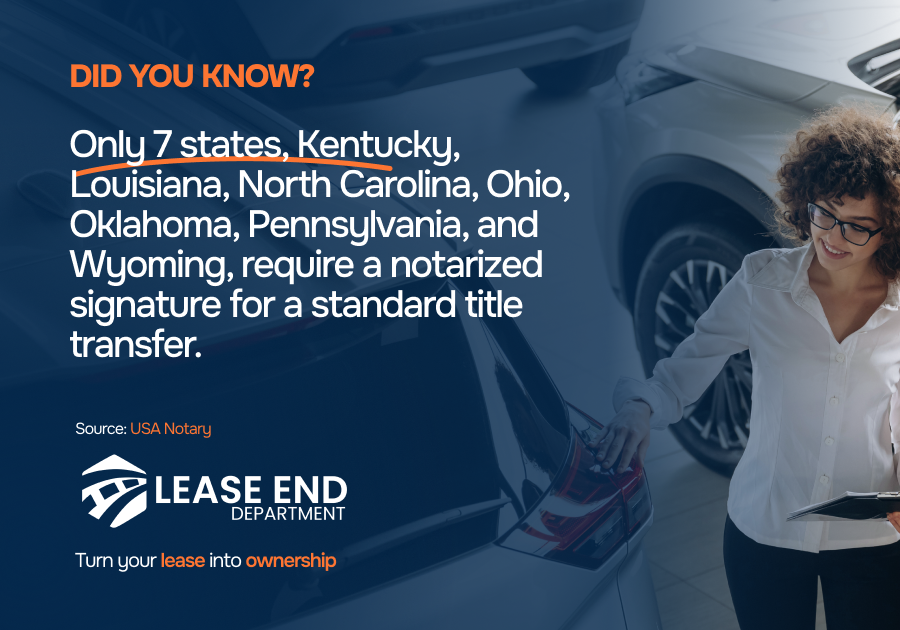
What Happens to the Title After a Lease Buyout
The moment you pay off your buyout is the moment the ownership story flips. The leasing company is no longer the one who gets to make decisions about the car, you do.
But “you’re the owner now” and “the title says so” aren’t the same moment, and the gap between them is basically administrative catch-up.
You own the car the moment the sale processes. The mailbox just hasn’t caught up yet.
The Ownership Transfer Process, Step by Step
Behind the scenes, a lease buyout title transfer generally moves through the same handful of steps, regardless of who your leasing company is:
- You (or your lender) submit final payment. This satisfies the buyout amount in full
- The leasing company releases the title. They either sign it over directly to you, or, in roughly 18 states known as “title-holding states,” they release it to the state DMV instead, which then reissues it in your name
- The DMV processes the transfer. Sales tax, title fees, and registration updates all get handled here, and it’s the step most likely to add extra days depending on your state’s backlog
- A new title is issued in your name. If you financed the buyout, your new lender’s name goes on as lienholder; if you paid cash, the title comes back completely clear
- That third step is worth flagging: a growing number of states now handle it electronically through what’s called an Electronic Lien and Title (ELT) system, which can shave real time off the process compared to a state still shuffling paper titles back and forth
When You Officially Become the Legal Owner
Legally, you become the vehicle’s owner the moment the leasing company processes the sale and releases the title, not when the physical document lands in your mailbox.
That difference matters more than people realize: your insurance, your ability to drive the car, and your ownership rights don’t wait on the mail carrier.
What does wait is anything that requires proof of clear title, like selling the car, using it as collateral elsewhere, or certain refinancing situations. For those, you’ll want the title (or, in some states, a lien release letter) in hand, not just confirmation that your buyout went through.
How Does a Lease Buyout Title Transfer Work
Now that you know what’s happening behind the scenes, here’s what it looks like from your seat, broken into the three moves that take you from “I still have a lease” to “I own this car outright.”
Step 1: Paying Off the Lease
Everything starts with satisfying the buyout amount, either in one payment if you’re paying cash, or through a new auto loan if you’re financing it. Either way, this is the step that triggers your payoff confirmation, the document that proves to everyone downstream (the DMV, your new lender, your insurance company) that the balance is cleared.
Pro tip: hang onto that payoff confirmation. You’ll likely need to reference it if your title takes longer than expected to show up.
Step 2: Leasing Company Releases the Title
Once payment is confirmed, the leasing company processes the release on their end, typically within about 10 business days. Depending on your state, that release goes one of two ways: they sign the title directly over to you, or, in title-holding states, they notify the DMV electronically and the state takes it from there.
Step 3: Registering the Vehicle in Your Name
The final move is on you: registering the car so the state’s records match reality.
That usually means submitting a handful of things together:
- Your payoff confirmation or lien release
- A completed title/registration application
- Proof of insurance
- A valid ID
- Payment for title fees, registration fees, and any applicable sales tax
Fees here vary quite a bit by state, more than most people expect. Texas, for example, charges a $28-33 title fee plus a small processing fee, while other states bundle title and registration together at a different rate entirely. It’s worth a quick check with your local DMV rather than assuming a number.
The Snags That Slow This Down
Most delays in this process trace back to a small handful of paperwork mismatches, not anything mysterious:
- The mileage on your title doesn’t match the mileage on your payoff paperwork
- The name on your ID doesn’t exactly match the name on the title assignment
- The VIN listed differs, even by one character, between your title and your registration application
- Insurance or inspection documents that are valid today but expire before the DMV finishes processing
Catching these before you submit, rather than after a rejection notice, is usually the difference between a 2-week title transfer and a 6-week one.
Documents, Fees, and Timelines: What to Expect From Your Title Transfer
Once you know the process, the next practical question is what to gather, budget, and wait for. Here’s the full picture in one place, so you’re not piecing it together from three different sources.
Documents You’ll Typically Need
Most title transfers come down to the same core paperwork, though your state may ask for one or two extras:
- Your payoff confirmation or lien release from the leasing company
- A completed title and registration application
- Proof of insurance
- A valid government-issued ID
- An odometer disclosure statement, if your vehicle is required to have one (federal rules generally require this for vehicles within 20 years of their model year, so most lease buyouts, being recently manufactured, will need one)
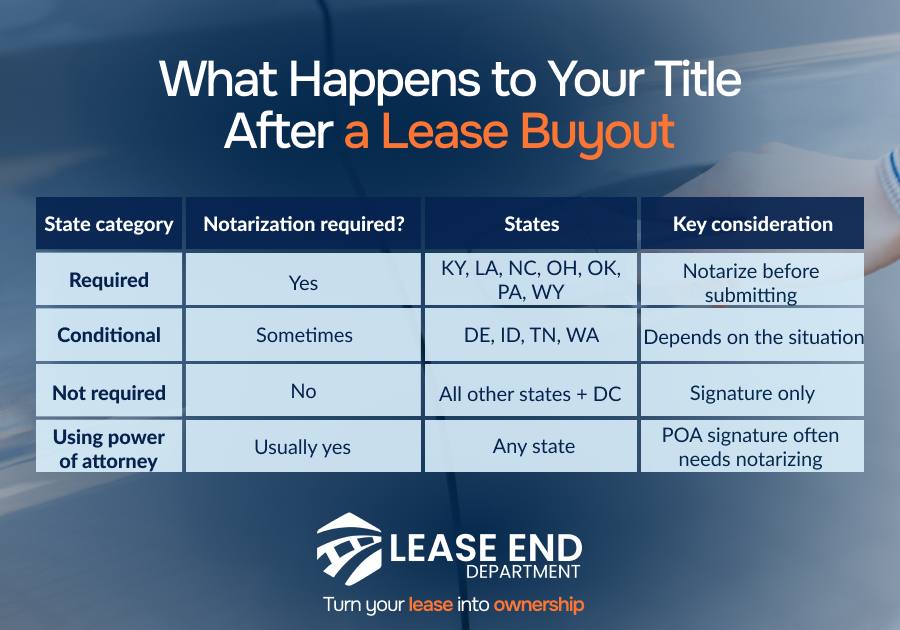
- A notarized signature, in the states that require it for title transfers
- Power of attorney paperwork, if you’re having a service like Lease End Department handle the transfer on your behalf
Fees to Budget For
| Fee type | What it covers | What affects the cost |
|---|---|---|
| Title fee | Issuing the new title in your name | Set by your state, generally a flat amount |
| Registration fee | Updating your plates and registration record | Varies by state and sometimes by vehicle weight/value |
| Sales or use tax | Tax on the buyout price | Varies the most, some states tax the full remaining payment stream, others only the buyout price |
| Notary/processing fees | Administrative steps some states require | Usually small, but easy to overlook when budgeting |
Sales tax tends to be the biggest swing factor by far. Alaska, Delaware, Montana, New Hampshire, and Oregon charge no sales tax on vehicle purchases at all, while most other states apply a rate to either your buyout price or, in some cases, your full remaining payment stream.
How Long the Whole Process Takes
Timelines depend less on your specific lease and more on how your state handles titles in general:
| Processing type | How it works | Typical timeframe |
|---|---|---|
| Electronic Lien and Title (ELT) states | Lien release and title transfer handled digitally between lender and DMV | About 2 to 3 weeks |
| Title-holding states | DMV already holds the title and reissues it once notified of payoff | About 2 to 4 weeks |
| Traditional paper-title states | Physical title mailed between lender, you, and the DMV | About 4 to 6 weeks, sometimes longer |
How LED Handles Titling, Registration and Plates
If there’s one thing worth carrying away from all of this, it’s that a title transfer isn’t a sign that something’s stuck, it’s just a process with its own pace, its own paperwork, and its own timeline depending on where you live.
Once you know who’s supposed to be holding the title at each stage, and what’s required to move it into your name, the whole thing stops feeling like a black box.
That said, you shouldn’t have to become a part-time DMV expert just to buy out your own lease.
Lease End Department helps drivers:
- Get a clear, accurate payoff quote before committing to a buyout
- Understand exactly which documents their state will require, before they’re standing in line without one
- Navigate financing, so the right lienholder information reaches the title the first time
- Handle titling, registration, and plate paperwork, cutting out the back-and-forth that usually causes delays
Lease Buyout Title Transfer: FAQs
Who holds the title after a lease buyout?
Once your buyout is paid off and processed, the title moves into your name (or your new lender’s name alongside yours, if you financed the buyout). Before that point, the leasing company or its financing arm was the one listed as the legal owner.
How do I get the title after a lease buyout?
You don’t need to request it separately. Once your payoff is confirmed and the leasing company releases the title, it moves through your state’s standard title transfer process automatically. Your part is making sure your registration paperwork and payment are submitted correctly so nothing holds it up on your end.
Is a lease buyout title transfer different from a regular used car title transfer?
Not fundamentally. Registering the vehicle and paying applicable fees works the same way as any other title transfer. The main difference is who’s releasing the title, a leasing company rather than a private seller, and that the vehicle’s history includes a lease rather than a standard purchase.
What if I don’t receive my title within the expected timeframe?
A few extra days here and there is normal, but if you’re well past your state’s typical window, it’s worth contacting the leasing company to confirm the release was processed, then following up with your state DMV directly.
Do I need to update my insurance once the title transfers to my name?
Yes, it’s worth notifying your insurer once your buyout is complete, since your policy may need to reflect you as the vehicle’s owner rather than a lessee. It’s a quick update, but an easy one to forget in the middle of everything else.
Can I sell the car before my title officially arrives?
Not usually. While you legally own the vehicle once the buyout processes, most buyers and DMVs want to see the actual title before a sale goes through. If you’re planning to sell soon after a buyout, it’s worth accounting for that waiting period in your timeline and consider residual value.
Will I need new license plates after a lease buyout?
In most states, no, your existing plates can stay on the vehicle since it’s not changing hands from one household to another. Some states do require new plates or a transfer fee, so it’s worth confirming with your local DMV as part of registration.

